

Views: 0 Author: Site Editor Publish Time: 2025-10-08 Origin: Site


As the world shifts toward sustainable energy, solar thermal panels are becoming a popular choice. But are they worth the investment? In this article, we’ll explore their benefits, challenges, and cost-effectiveness. You’ll learn whether solar thermal panels are the right option for your home’s heating needs.
Solar thermal panels are systems designed to harness the sun’s heat to provide hot water for domestic use. Unlike solar photovoltaic (PV) panels, which convert sunlight into electricity, solar thermal panels focus on capturing and converting sunlight into heat. This heat is then transferred to a fluid (typically water or glycol) that circulates through the system, warming the water in a storage tank.
The primary benefit of solar thermal panels is their efficiency in heating water, which is essential for domestic hot water needs.
Solar thermal panels operate through a relatively simple process. Sunlight is absorbed by the panel’s absorber plate, which is usually made of a metal coated with a highly absorptive material. The absorbed heat is transferred to the fluid circulating within the panel. This fluid is pumped into a storage cylinder, where the heat is retained for later use.
In many systems, a twin coil cylinder is used. The first coil is connected to the solar panels and absorbs the heat, while the second coil connects to a backup heat source like a boiler, ensuring hot water availability even on cloudy days.
Tip: To maximize the efficiency of a solar thermal system, ensure that your system is designed to meet the expected hot water demand based on household size and usage patterns.
There are two main types of solar thermal panels: flat panels and evacuated tubes.
Flat Panels | These are the most common type. They are relatively simple in design, featuring an absorber plate beneath a layer of glass. They are best suited for moderate climates where sunlight is abundant but not extreme. |
Evacuated Tubes | These panels are made up of multiple glass tubes, each containing a copper pipe. The vacuum inside the tube serves as insulation, which improves efficiency, especially in colder weather. They tend to be more expensive but are ideal for locations that experience varying or colder climates. |
One of the primary reasons homeowners consider solar thermal panels is the potential for energy savings. By using solar energy to heat water, you can reduce your reliance on gas or electric water heating systems, which can be costly to operate.
The payback period for a solar thermal system varies depending on factors like the cost of installation, your current energy bills, and how much hot water your household uses. On average, homeowners can expect to recoup their investment within 7-20 years, with the potential for long-term savings as energy prices continue to rise.
Solar thermal panels are relatively low-maintenance systems. Once installed, they require minimal intervention, making them a hassle-free energy solution. The panels are durable, with a typical lifespan of 20-25 years, and most systems come with a warranty of 5-10 years.
The components of a solar thermal system, including the panels and storage tank, have few moving parts, reducing the risk of mechanical failure.
Solar thermal systems offer significant environmental benefits. By utilizing renewable solar energy, they help reduce reliance on fossil fuels and lower greenhouse gas emissions. This makes them a great choice for homeowners who are committed to sustainability and reducing their carbon footprint.
Moreover, because solar thermal panels only generate heat, they don't produce harmful emissions during operation, unlike conventional heating systems powered by natural gas or electricity.
Unlike solar PV panels, solar thermal panels take up less space on your roof. This is particularly beneficial if you have limited roof space but still want to take advantage of solar energy for heating purposes.
In addition, solar thermal panels can be installed in a variety of configurations, whether landscape or portrait, to best fit the available roof area.
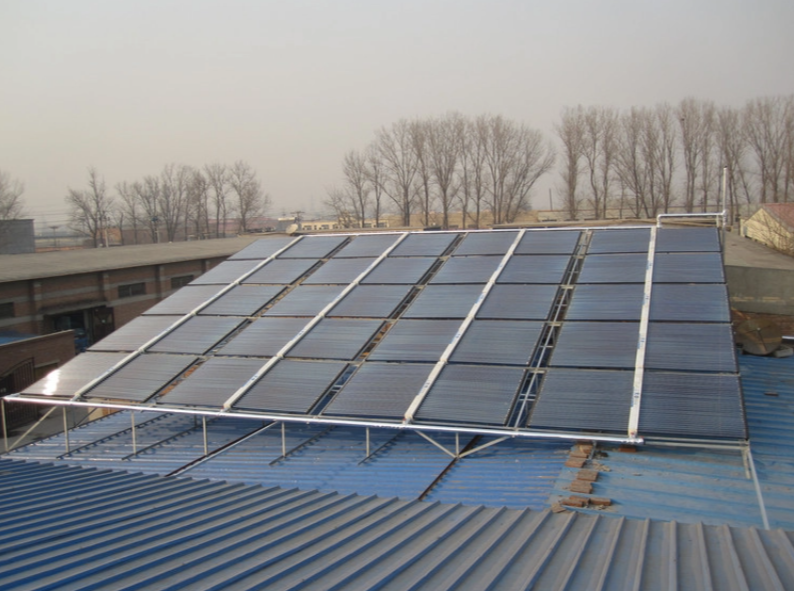
Solar thermal panels are highly efficient in sunny conditions, but their performance can be significantly affected by weather. During the winter months, when sunlight is weaker and the days are shorter, solar thermal panels produce less heat. The efficiency drops further on cloudy days or when there’s a lot of snowfall.
Moreover, because the panels rely on sunlight to generate heat, they are not effective in regions with long periods of overcast skies.
Tip: Consider a hybrid system or ensure you have a backup heating source if you live in a region with extended winters or frequent cloudy days.
While solar thermal panels can save you money in the long run, the initial installation costs can be significant. The price for a typical system ranges from £4,000 to £7,000, depending on the complexity of installation and the type of panels used. Additionally, you'll need to factor in the cost of a larger hot water storage tank, which can add another £600 to £2,000.
One of the limitations of solar thermal systems is their compatibility with certain heating systems. For example, solar thermal panels do not work efficiently with combi boilers, which do not have a separate hot water tank. Instead, they are best used in homes with a system boiler and a hot water storage cylinder.
Before investing in solar thermal panels, consider factors such as your household's hot water usage, roof orientation, and local climate. If you have a large family or use a lot of hot water, a solar thermal system may provide significant savings. Additionally, a south-facing roof with minimal shading will maximize the system's efficiency.
Solar thermal systems are ideal for homes with high hot water demands, especially during the day when the sun is at its peak. They are also well-suited for replacing oil or LPG heating systems, as they can provide substantial savings on heating costs.
They are particularly beneficial for homes with swimming pools, where they can reduce the cost of pool heating.
While both solar thermal and photovoltaic panels use the sun's energy, they serve different purposes. Solar thermal panels are designed to heat water, while photovoltaic panels generate electricity. If your primary need is hot water, solar thermal is more efficient. However, if you need to power your home, photovoltaic panels are a better fit.
On average, a four-person household can save up to £150 annually by using solar thermal for half of their hot water needs. The exact savings depend on the household’s water usage and the cost of replacing traditional energy sources like gas or electricity.
If you’re replacing a gas-powered water heater, you can save about £150 per year. For homes using electric heating, the savings can be as much as £600 annually.
Solar thermal panels are worth the investment if your home uses a lot of hot water, has a suitable roof, and you want a renewable solution that can lower your carbon footprint. They are particularly valuable for homes with large families or commercial applications, such as swimming pools or hotels.
For households with minimal hot water use, other renewable energy solutions like hybrid solar systems may provide better value.
Solar thermal panels provide excellent energy savings, environmental benefits, and space efficiency. However, they may not be suitable for every home. Their effectiveness depends on roof orientation, climate, and hot water usage. While the initial investment can be high, the long-term savings and eco-friendly advantages can be worth it for the right household.
For personalized advice, consider reaching out to an expert like SOLARAVEN to determine if solar thermal is right for your home.
A: Solar thermal panels capture sunlight to heat water for domestic use, unlike solar PV panels that generate electricity.
A: Solar thermal panels use an absorber plate to collect sunlight, which heats a fluid. This fluid transfers the heat to a storage tank for hot water.
A: Solar thermal panels are worth it for homes with high hot water demand. They offer energy savings, lower bills, and environmental benefits, though initial costs can be high.
A: The installation of solar thermal panels typically costs between £4,000 and £7,000, depending on the system size and complexity.
A: Solar thermal panels can work in winter, but their efficiency decreases with shorter days and less sunlight. They require backup systems for colder months.
A: Solar thermal panels typically last 20-25 years, with minimal maintenance required during their lifespan.


