

Views: 0 Author: Site Editor Publish Time: 2025-11-12 Origin: Site


Are you tired of high energy bills from traditional water heaters? Discover the advantages of a heat pump water heater. These innovative systems offer significant energy savings and environmental benefits. In this post, you'll learn what a heat pump water heater is and why you should consider one for your home."
A heat pump water heater works differently from traditional electric water heaters. Instead of generating heat directly, it moves heat from the surrounding air into the water. Here’s how it works step-by-step:
1. Heat Absorption: The system pulls warm air from the room or environment.
2. Heat Transfer: This warm air passes over an evaporator coil containing refrigerant, which absorbs the heat and turns into a gas.
3. Compression: The refrigerant gas is compressed by a compressor, raising its temperature.
4. Heat Release: The hot refrigerant passes through a condenser coil inside the water tank, releasing heat to warm the water.
5. Cycle Restart: The refrigerant cools down and turns back into a liquid, ready to absorb more heat.
This process uses electricity only to run the compressor and fans, not to create heat directly. It’s much more energy-efficient because it leverages existing heat instead of producing it from scratch.
A typical heat pump water heater includes several key parts working together:
● Evaporator Coil: Absorbs heat from the air and transfers it to the refrigerant.
● Compressor: Compresses refrigerant gas, increasing temperature and pressure.
● Condenser Coil: Transfers heat from the refrigerant to the water in the tank.
● Expansion Valve: Controls refrigerant flow and pressure between coils.
● Storage Tank: Holds the heated water ready for use.
● Fans: Move air across the evaporator coil to collect heat efficiently.
● Control System: Manages temperature settings, modes, and diagnostics.
These components form a closed-loop system that efficiently captures and transfers heat to water. The system’s design allows it to operate quietly and reliably while consuming less energy than conventional water heaters.
Proper installation and sufficient surrounding air space are crucial for heat pump water heaters to operate efficiently, as they rely on ambient air temperature to transfer heat.
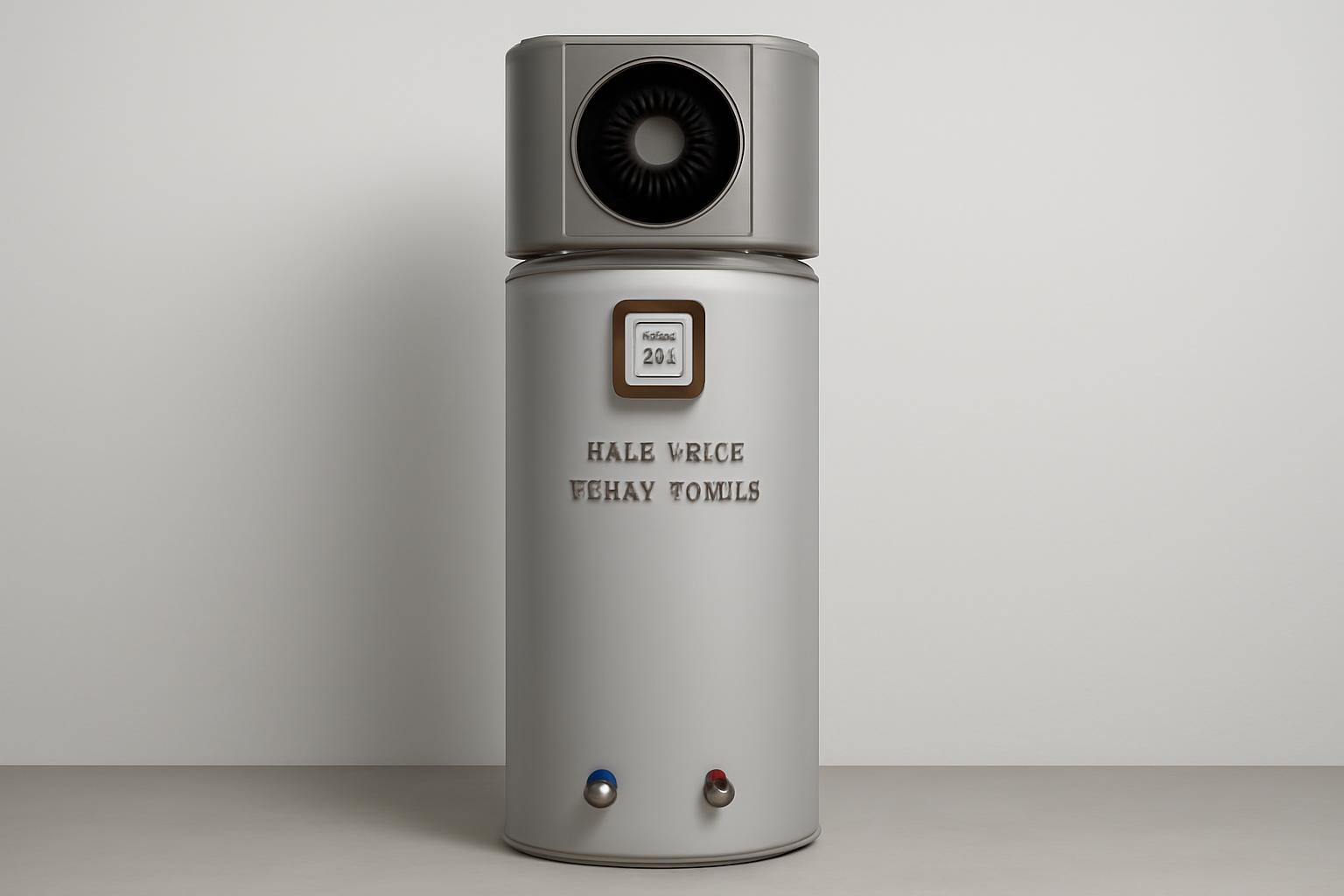
Heat pump water heaters save energy by moving heat rather than creating it. Unlike traditional electric water heaters that use electric resistance elements to generate heat directly, heat pumps pull warmth from the surrounding air. This process requires only a fraction of the electricity because it uses a refrigerant cycle to transfer heat efficiently.
Here’s why this matters:
● Lower electricity use: Heat pumps consume about 25% of the energy that conventional electric water heaters use.
● Heat recycling: They capture and reuse heat from the air, which would otherwise be wasted.
● Reduced heat loss: The insulated tank keeps water warm longer, cutting the need for reheating.
Because they use ambient air as a heat source, heat pump water heaters operate best in spaces where the air temperature stays between 40°F and 90°F. This ensures the system can extract enough heat to warm water effectively without overworking.
When compared to traditional water heaters, heat pump models deliver substantial efficiency gains. Here’s a quick comparison:
Feature | Heat Pump Water Heater | Traditional Electric Water Heater |
Energy consumption | Uses approximately 25% energy | Uses 100% energy directly for heat |
Water heating cost savings | Up to 73% lower | No significant savings |
Average lifespan | 10-15 years | 8-12 years |
Environmental impact | Lower due to less electricity | Higher due to more electricity use |
For example, a heat pump water heater might save around $600 annually on energy bills compared to a traditional electric water heater. Over a decade, that adds up to roughly $6,000 in savings, depending on local energy rates and usage patterns.
In addition to lower operating costs, heat pump water heaters often qualify for energy-efficiency rebates or tax incentives, making them more affordable upfront.
Heat pump water heaters perform best in warm or moderate climates; their efficiency drops in very cold environments where supplemental heating may be required.
One of the biggest advantages of heat pump water heaters is their lower operating costs. Because they use electricity mainly to run the compressor and fans, they consume far less energy than traditional water heaters that rely on electric resistance heating elements. This efficiency translates directly into savings on your utility bills.
● Reduced energy bills: Heat pump water heaters can cut water heating costs by up to 73%, depending on usage and local energy prices.
● Long-term savings: Over 10 years, this can add up to thousands of dollars saved compared to standard electric water heaters.
● Durability: Many heat pump water heaters last longer, reducing replacement costs over time.
For example, a household that typically spends $800 annually on water heating might only spend around $200 with a heat pump water heater, saving about $600 each year. These savings can be even greater in regions with high electricity rates.
In addition to lower operating costs, heat pump water heaters often qualify for various tax credits, rebates, and incentives designed to encourage energy efficiency. These financial benefits can significantly reduce the initial investment cost.
● Federal tax credits: Many countries offer federal tax credits for installing energy-efficient water heating systems, including heat pumps.
● State and local rebates: Some states and municipalities provide rebates or incentives for upgrading to heat pump water heaters.
● Utility company programs: Certain utility providers offer rebates or discounted rates for installing these systems.
These incentives can lower upfront costs by hundreds or even thousands of dollars, making heat pump water heaters more affordable. Before purchasing, check with local energy authorities or utility companies to learn about available programs.
Always research and apply for local and federal rebates or tax credits before purchasing a heat pump water heater to maximize your upfront savings.
Heat pump water heaters help cut carbon footprints by using far less electricity than traditional electric water heaters. Since they transfer heat from the air rather than generating it directly, they consume about 75% less energy. This reduction in energy use means fewer greenhouse gas emissions, especially if your electricity comes from fossil fuels.
By lowering electricity demand, these systems also ease the strain on power plants, which often rely on burning coal or natural gas. This results in less air pollution and fewer harmful emissions released into the atmosphere. Over time, switching to a heat pump water heater can significantly reduce your home's overall environmental impact.
Heat pump water heaters align well with sustainable energy goals. Their efficient design allows them to work effectively alongside renewable energy sources like solar or wind power. When paired with solar panels, for example, they can use clean electricity to run the compressor, making hot water heating nearly carbon-neutral.
Additionally, because they move heat instead of producing it, these water heaters reduce the demand for non-renewable energy. This supports a transition toward greener energy grids and helps communities meet climate targets.
Using a heat pump water heater encourages a more responsible approach to energy consumption. It’s a practical step toward sustainability that homeowners and businesses can take today to protect the environment for future generations.
Consider pairing your heat pump water heater with renewable energy sources like solar panels to maximize environmental benefits and reduce reliance on fossil fuels.
Heat pump water heaters often come with advanced temperature control options that let you set water temperatures precisely. Unlike traditional water heaters with basic thermostats, these systems usually offer digital controls or touchscreens. This allows you to:
● Choose exact temperatures for comfort and safety.
● Switch between different modes like "Energy Saver," "Vacation," or "High Demand."
● Schedule water heating times to match your routine or utility rate changes.
These options help you optimize energy use while ensuring you always have hot water when needed. Some models even allow remote control through smartphone apps, giving you flexibility and convenience.
Many heat pump water heaters include built-in diagnostic tools to monitor system health and performance. These features can:
● Detect leaks, electrical issues, or component malfunctions early.
● Alert you via display panels or connected apps.
● Provide maintenance reminders to keep the system running efficiently.
Diagnostic features reduce the risk of unexpected breakdowns and costly repairs. They make it easier for professionals to troubleshoot problems quickly, saving time and money. Regular maintenance notifications also help extend the lifespan of your water heater.
Together, temperature controls and diagnostic systems make heat pump water heaters user-friendly and reliable. They provide peace of mind and help you get the most from your investment.
Choose a heat pump water heater with smart controls and diagnostics to simplify management and maximize energy savings.
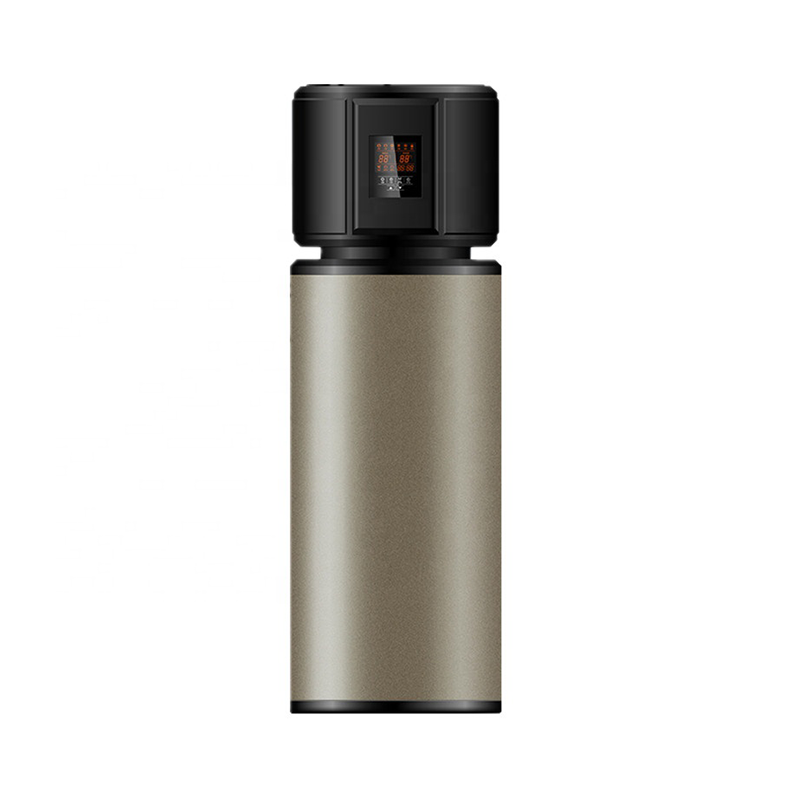
One of the main drawbacks of heat pump water heaters is their higher upfront price compared to traditional models. These systems use advanced technology and specialized components, which increases manufacturing costs. As a result, you can expect to pay significantly more when purchasing a heat pump water heater.
● Price range: Heat pump water heaters often cost two to three times more than standard electric water heaters. For example, a typical electric water heater might cost $500 to $700, while a heat pump model can range from $1,200 to $2,500 or more.
● Installation expenses: Because these units require specific installation conditions, labor costs may also be higher. Installers need to ensure adequate space and proper ventilation for the system to work efficiently.
● Long-term investment: Although the initial cost is greater, many owners find the energy savings and incentives offset this over time.
It’s important to consider your budget and how long you plan to stay in your home. If you live somewhere with high electricity costs or want to reduce your environmental impact, the higher initial cost may be worth it.
Installing a heat pump water heater involves more than just swapping out an old tank. These systems have unique requirements to operate efficiently:
● Space and air volume: Heat pump water heaters need enough surrounding air to draw heat from. They work best in areas with at least 1,000 cubic feet of air space, like basements, garages, or large utility rooms.
● Ambient temperature: Since they pull heat from the air, these units perform poorly in very cold spaces. If your installation area drops below 40°F regularly, supplemental heating or alternative systems may be necessary.
● Ventilation: Proper airflow is essential. The unit’s fans must circulate air effectively, so cramped or sealed rooms can reduce efficiency and cause overheating.
● Noise level: Heat pump water heaters generate some noise from compressors and fans. While generally quieter than older models, noise-sensitive areas might require soundproofing or placement away from living spaces.
Because of these factors, professional installation is strongly recommended. Experts can assess your home’s layout and climate to determine if a heat pump water heater is a good fit and install it correctly.
Before purchasing, have a qualified technician evaluate your space and local climate to ensure a heat pump water heater will operate efficiently and meet your needs.
Heat pump water heaters offer substantial energy savings by transferring heat rather than generating it. They provide lower operating costs and environmental benefits, making them an excellent choice for eco-conscious homeowners. However, their higher initial costs and specific installation requirements should be considered. For those looking to invest in efficient water heating solutions, Changzhou Raven New Energy Technology Co.,Ltd. offers advanced heat pump water heaters with unique features that enhance value and performance.
A: A Heat Pump Water Heater is a device that heats water by transferring heat from the surrounding air, using a refrigerant cycle, rather than generating heat directly like traditional water heaters.
A: Heat Pump Water Heaters save energy by using ambient air to transfer heat, consuming only about 25% of the electricity used by conventional electric water heaters.
A: Opting for a Heat Pump Water Heater offers benefits like lower energy bills, environmental impact reduction, and potential tax incentives, despite a higher upfront cost.
A: Heat Pump Water Heaters need adequate space, proper ventilation, and ambient temperatures between 40°F and 90°F for optimal performance.
A: Yes, they offer lower operational costs, potential tax credits, and rebates, leading to significant long-term savings.


