

Views: 0 Author: Site Editor Publish Time: 2026-04-22 Origin: Site


Upgrading commercial water heating is a high-stakes capital expenditure. Fossil-fuel and standard electric systems offer predictable upfront costs. However, their lifecycle operating expenses often erode profitability over time. Transitioning to a Commercial Solar Water Heater introduces complex variables. You must navigate local climate dependency and legacy infrastructure integration. Yet, doing so successfully unlocks massive total cost of ownership (TCO) reductions. It also ensures strict ESG compliance for your corporate brand.
This guide breaks down the technical, financial, and architectural criteria you need. You will learn how to evaluate, size, and select the right Solar Water Heater for your facility. We explain how to calculate recovery rates and build a resilient hybrid system. Our goal is to help you secure a reliable setup without falling for over-engineered sales pitches.
Economic Sizing Limit: Designing a solar system for 100% year-round coverage is economically inefficient; optimal ROI is achieved by sizing for 100% capacity on the sunniest days (covering ~70% of the annual load).
Collector Selection is Climate-Dependent: Evacuated-tube collectors dominate commercial applications due to superior heat retention, especially in colder climates.
Hybrid Redundancy is Mandatory: Commercial operations require uninterrupted hot water; pairing solar with heat pumps or tankless backups ensures zero downtime.
Total Cost of Ownership (TCO) Drives the Decision: Look beyond procurement costs to factor in accelerated depreciation, tax incentives, and annual O&M (typically 0.5%–2% of initial investment).
Before you compare hardware models, check your site feasibility. You must determine if your facility can support a viable installation. Geographic and structural constraints dictate your overall success. Overlooking these factors leads to project delays and blown budgets.
First, verify your local daily solar radiation. Weather patterns directly impact heat generation. Commercial viability generally requires a baseline of at least 4.5 kWh/m²/day. If your region falls below this threshold, return on investment (ROI) stretches too far. You can consult National Renewable Energy Laboratory (NREL) data or similar local resources. These databases help you confirm your exact regional radiation averages.
Solar hardware demands significant physical space. You need unshaded, south-facing roof or ground space. A good rule of thumb helps here. Budget roughly 1 to 2 gallons of storage per square foot of collector area. Beyond physical space, audit your local "Solar Rights" legislation. Many jurisdictions protect your access to sunlight. You must ensure future surrounding developments cannot legally block your solar access.
Moving from gas or electric to solar requires a thorough plumbing audit. You must assess pipe compatibility and voltage matching for active pump systems. Structural roof load is equally critical. Water is incredibly heavy. It weighs over 8 pounds per gallon. Adding large storage tanks and collectors stresses legacy roofing structures. Engage a structural engineer to confirm your roof can handle the operational load safely.
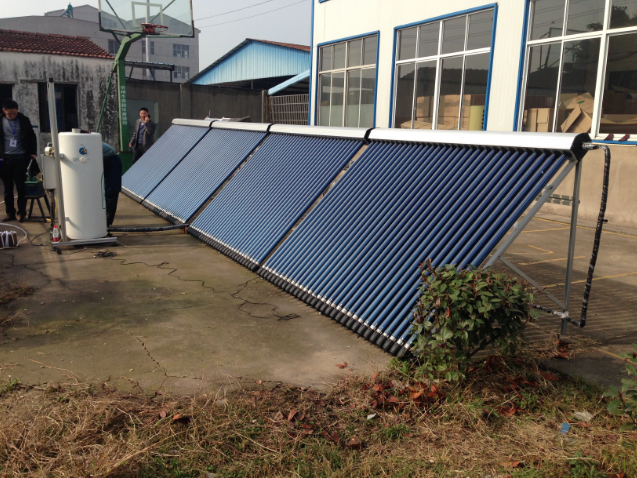
Incorrect sizing damages your commercial operation. Undersizing leads to operational failure during peak hours. Oversizing wastes capital on unused capacity. You need precise math to find the perfect middle ground.
Calculate your exact Gallons Per Hour (GPH) recovery rate. This metric defines how fast the system generates hot water. You must measure this during your facility's busiest shift. Peak hotel shower hours or restaurant dishwashing cycles dictate this number. Accurate GPH data prevents system crashes when you need hot water most.
Pay close attention to this crucial ROI warning. Avoid vendors pushing a 100% year-round solar offset. Capturing winter deficits requires massive storage and excessive collectors. This over-engineering destroys your financial ROI. Instead, size the system to cover 100% of the load on the sunniest day of the year. This optimally covers roughly 70% of your annual load. You then rely on backup systems for the rest. This approach maximizes efficiency and minimizes capital waste.
Facility types dictate your tank volume requirements. You must differentiate between constant-load facilities and variable-load facilities. Constant loads pull water steadily. Variable loads experience massive, sudden spikes. Understanding your load profile informs your storage sizing.
Facility Type | Load Profile | Design Consideration | Typical Sizing Strategy |
|---|---|---|---|
Hospitals / Manufacturing | Constant Load | Steady, predictable hourly demand. | Moderate storage, focus on high continuous GPH recovery. |
Hotels / Motels | Variable Load | Massive morning and evening spikes. | Oversized storage tanks to buffer sudden extreme drawdowns. |
Schools / Gyms | Variable Load | Intermittent, specific shift peaks. | Moderate storage with high-efficiency rapid booster backups. |
You must align the underlying technology with your climate zone. Your internal maintenance capabilities also dictate the right choice. Buying the wrong architecture results in frozen pipes or inadequate temperatures.
Active systems utilize commercial circulation pumps and electronic controllers. They push water actively through the array. These are best for high-volume commercial use. They offer precise temperature control. Passive systems rely entirely on thermodynamics (thermosyphon). They have lower maintenance needs and longer lifespans. However, passive systems are generally insufficient for heavy commercial demand.
Direct (Open Loop) systems circulate potable water directly through the collectors. You should only use these in non-freezing, tropical climates. If temperatures drop, the water freezes and shatters the collectors. Indirect (Closed Loop) systems pump anti-freeze heat-transfer fluid through collectors. This fluid then passes through a heat exchanger to warm the water. Indirect systems are mandatory for freezing climates.
Collectors capture the solar radiation. You have two primary options for commercial installations. The right choice depends on your operating temperature needs and local weather.
Feature | Evacuated-Tube Collectors | Flat-Plate Collectors |
|---|---|---|
Mechanism | Parallel glass tubes with a vacuum seal to trap heat. | Dark absorber plate under a glass cover. |
Climate Fit | Ideal for overcast, cold, or freezing climates. | Best for moderate to warm, sunny climates. |
Performance | Excellent heat retention; minimal radiant heat loss. | Prone to heat loss in high winds or cold air. |
Commercial Use | The undisputed commercial standard for high temperatures. | Cost-effective for medium-temperature applications. |
Commercial facilities cannot rely solely on the weather. A primary Solar Water Heater must integrate with a reliable backup. You need guaranteed hot water to maintain health codes and customer satisfaction. A hybrid architecture provides this safety net.
This is the most energy-efficient hybrid approach. Commercial air-source heat pumps pull ambient heat from the air. When solar radiation drops on cloudy days, the heat pump activates. It maintains tank temperatures at a fraction of standard electrical costs. This combination creates a powerful, low-emission powerhouse. It drastically reduces reliance on traditional grid energy.
High-efficiency tankless water heaters act as excellent boosters. They eliminate standby heat loss entirely. The tankless unit sits downstream from the solar storage tank. It monitors the incoming water temperature constantly. The unit only ignites when the solar pre-heated water falls below your required setpoint. This on-demand firing guarantees zero downtime. It also prevents fuel waste when the solar array performs optimally.
Shift your procurement lens away from the initial purchase price. You are buying a multi-decade asset. You must build a 10-to-15-year lifecycle financial model. A properly scaled Commercial Solar Water Heater pays for itself quickly if managed correctly.
Anticipate a massive reduction in your water heating utility bills. Typical savings range between 50% and 80%. You need to define your break-even point early. Commercial setups usually break even within 2 to 5 years. This timeframe depends heavily on your local utility rates and fuel costs. After this point, the system generates pure operational profit.
Government policies reward renewable energy adoption. You must leverage these programs to lower your net CapEx. Follow these steps to maximize your financial and regulatory returns:
Calculate Tax Incentives: Factor in federal and state tax credits. Apply local utility rebates to the initial invoice.
Apply Accelerated Depreciation: Use commercial depreciation schedules (like MACRS in the US). This radically lowers the net system cost on your tax returns.
Quantify ESG Brand Equity: Calculate your reduction in Scope 1 and Scope 2 emissions. Use this data for corporate ESG reporting and stakeholder compliance.
Ensure Code Compliance: Verify the system meets NAECA energy standards. Ensure installation adheres to ASHRAE guidelines and NFPA 70 electrical codes.
A commercial solar setup is a massive infrastructure project. The vendor relationship is as critical as the hardware itself. You need a partner, not just a parts supplier. Orphaned systems from bankrupt vendors become expensive liabilities.
Prioritize vendors offering turnkey solutions. You want site-audits, custom engineering, installation, and hybrid-system integration under one roof. Fragmented installations lead to finger-pointing. Plumbers blame electricians, and solar techs blame roofers. A single point of accountability protects your investment.
Do not assume the system is maintenance-free. Budget for annual Operation & Maintenance (O&M) costs. These typically run at 0.5% to 2% of the initial capital investment. Routine flushing, pump inspections, and fluid checks prevent catastrophic failures.
Warranty Benchmarks: Look for 10+ year warranties on collectors and storage tanks.
Parts Availability: Ensure the vendor provides readily available replacement parts for circulation pumps and electronic controllers.
Service Level Agreements (SLAs): Demand guaranteed response times for unexpected commercial outages.
Descaling Ports: Mandate commercial-grade accessible descaling ports if your facility has hard water.
Choosing the right commercial setup requires balancing practical constraints against rigorous financial models. You must weigh climate realities, physical space, and peak GPH demand carefully. By analyzing your Total Cost of Ownership, you can turn a capital expense into a profit-generating asset. Remember these final action steps as you move forward.
Resist Over-Engineering: Do not design for 100% winter coverage. Optimize for the sunniest days to protect your ROI.
Prioritize Redundancy: Pair your solar array with a high-efficiency heat pump or tankless backup to guarantee zero downtime.
Demand Turnkey Execution: Engage a certified commercial solar thermal engineer. Run a site-specific radiation assessment and load-profile calculation before signing contracts.
A: Yes, but indirect (closed-loop) systems are required. The heat-transfer fluid protects the collectors from scaling. Meanwhile, the storage tank should feature commercial-grade self-cleaning mechanisms or easily accessible descaling ports.
A: With proper O&M, the core infrastructure can last up to 40 years. Collectors and piping are highly durable. However, moving parts like circulation pumps and electronic controllers typically require replacement every 10 years.
A: Solar recovery rates fluctuate daily based on radiation. Because of this, commercial setups use large storage tanks to buffer peak demand. For instantaneous high-volume recovery comparable to gas, a hybrid solar-plus-gas-booster system is standard practice.


