

Views: 0 Author: Site Editor Publish Time: 2026-04-17 Origin: Site


Imagine combining the infinite, on-demand supply of a modern water heating system alongside the clean, renewable power of the sun. It sounds like the perfect residential upgrade. Everyone wants endless hot showers without paying staggering monthly energy bills.
However, true "tankless" solar setups rarely exist in a vacuum. Solar thermal physics requires a physical storage tank to capture daytime energy. The industry standard actually uses a hybrid approach. It pairs solar pre-heating systems directly to an on-demand backup unit. A Tankless Solar Water Heater system works exceptionally well to reduce utility costs.
You just need the right climate criteria, adequate space, and proper engineering to prevent component wear. In this guide, you will learn exactly how these systems operate. We will evaluate their true return on investment. You will also discover what technical pitfalls to avoid during your installation.
A "tankless solar water heater" typically pairs a solar thermal collector and storage tank with an inline gas or electric tankless water heater.
The system operates by using solar energy to pre-heat water, while the tankless unit only activates to close the gap between the pre-heated temperature and the target output.
Proper integration requires specific components (like thermostatic mixing valves) to prevent scalding and avoid damaging the tankless unit via short-cycling.
High upfront installation costs are typically offset by aggressive federal/local tax incentives and decades of drastically reduced operational costs.
Many homeowners misunderstand how solar thermal technology operates. You cannot simply place a panel on your roof and get instant hot water at night. Solar thermal physics requires a storage tank to capture daytime energy. The sun produces the most heat at midday. However, families use the most hot water in the early mornings and late evenings. A storage tank bridges this time gap. The "tankless" portion of this setup serves purely as the backup heater.
The journey begins on your roof. Solar collectors absorb radiant heat. You generally choose between two technologies: evacuated tubes or flat plate collectors. Flat plates work great in warm, sunny climates. Evacuated tubes perform better in freezing temperatures because they feature superior insulation. A heat transfer fluid absorbs the solar energy. A small pump circulates this fluid down to a heat exchanger inside your primary storage tank. This process gradually warms your household water supply throughout the day.
When you open a hot water tap, the system springs into action. Water flows out of the solar storage tank first. It travels directly into your tankless water heater. If you rely on a standard standalone solar setup, a depleted tank means a cold shower. By integrating an on-demand unit, you eliminate this risk. The tankless unit acts as a vigilant gatekeeper.
Modern tankless units utilize smart modulation. They measure the incoming water temperature instantly. Suppose your target shower temperature is 120°F. If it is a bright summer day, the solar-heated water might arrive at 130°F. The tankless unit detects this and stays completely dormant. It uses zero gas or electricity.
Conversely, imagine a cloudy winter morning. The solar tank might only heat the water to 90°F. The tankless unit fires up immediately. It modulates its burners to add exactly the remaining 30°F. It works just enough to close the temperature gap. This precise modulation saves tremendous amounts of energy over time.
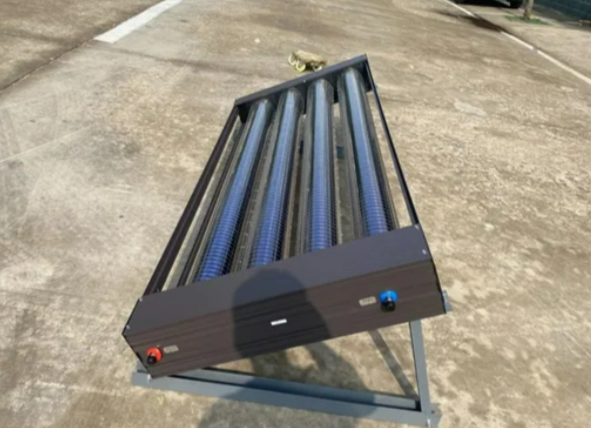
Homeowners often worry about flow rates. Can this hybrid setup support concurrent high-flow applications? The answer is a resounding yes. You must evaluate your peak demand carefully. A typical shower requires 2.5 gallons per minute (GPM). If you run two showers and a modern dishwasher simultaneously, you need roughly 6 to 7 GPM. The storage tank supplies the initial volume. The inline backup unit ensures the temperature remains stable across multiple fixtures.
Performance relies heavily on your local climate. Engineers use a metric called the "solar fraction." This represents the percentage of your annual water heating load handled purely by the sun.
High Sun States (e.g., Arizona, Florida): Solar fractions often reach 80% to 90%. The backup unit rarely fires.
Moderate Climates (e.g., Ohio, Oregon): Expect a solar fraction closer to 50% or 60%. Winter groundwater temperatures drop significantly.
Cold groundwater forces your system to work harder. The sun provides a vital boost, but the backup heater will engage more frequently during winter months.
A standalone Solar Water Heater eventually runs cold. Once you deplete the hot water in the storage tank, you must wait for the sun to reheat it. This is highly impractical for large families. The hybrid backup changes the equation entirely. It guarantees continuous flow. Because the tankless unit heats water instantly as it passes through, your hot water supply becomes literally endless. You enjoy ultimate comfort without sacrificing sustainability.
A hybrid setup requires a significant initial investment. You must purchase multiple major components. You need roof-mounted solar collectors. You need a dedicated solar storage tank equipped with internal heat exchangers. You also need a high-efficiency tankless unit. Finally, specialized plumbing integration costs add up quickly. Professional labor involves running line sets, installing pumps, and configuring smart controls.
The operational savings quickly justify the high CapEx. Water heating accounts for roughly 20% of an average home's energy budget. By allowing the sun to handle the heavy lifting, you slash your primary fuel usage. If you use natural gas or electricity for your tankless unit, expect those specific bills to plummet. The smart modulation ensures you never pay to heat water unnecessarily.
Equipment longevity plays a massive role in your total cost of ownership (TCO). Quality solar collectors easily last 20 to 25 years. They have no moving parts. The storage tank usually lasts 10 to 15 years. A well-maintained tankless unit operates reliably for about 15 years.
You must factor in routine maintenance. Closed-loop solar systems require glycol fluid checks every few years. The tankless unit requires an annual descaling flush to remove mineral buildup. Ignoring these tasks degrades efficiency rapidly.
Government incentives change the financial math completely. The federal Solar Investment Tax Credit (ITC) allows you to deduct a massive percentage of your total installation costs from your federal taxes. Local utility companies frequently offer cash rebates. These incentives buy down the initial CapEx dramatically. They turn a luxury upgrade into a financially sound home improvement.
TCO Comparison Chart: Standard vs. Hybrid Solar-Tankless
The table below provides a simplified comparison over a 20-year horizon for an average four-person household.
Metric | Standard Gas Tank Heater | Hybrid Solar-Tankless System |
|---|---|---|
Initial Equipment & Installation | $1,500 - $2,500 | $7,000 - $10,000 |
Expected Lifespan | 10 - 12 Years | 20+ Years (Solar) / 15 Years (Tankless) |
Annual Energy Cost | $300 - $500 | $50 - $100 |
Estimated 20-Year Energy Spend | $8,000 | $1,500 |
Tax Incentives Available | Minimal | High (Federal ITC + Local Rebates) |
Combining these two systems creates unique engineering challenges. The most severe risk involves feeding overly hot water into a standard tankless unit. Standard units expect cold groundwater. If the solar tank sends water at 130°F, the tankless unit might ignite, instantly realize the water is too hot, and shut off. This causes rapid turning on and off. We call this "short-cycling." It destroys flow sensors and burns out heat exchangers prematurely.
You must install specific safeguards to protect your equipment. A thermostatic mixing valve (TMV) is mandatory. You install the TMV before the water enters the tankless heater. It blends the scorching solar-heated water with a little cold water. This regulates the inlet temperature perfectly. It prevents dangerous scalding at the tap. More importantly, it keeps the tankless unit from experiencing thermal shock or short-cycling.
Best Practices and Common Mistakes
Best Practice: Always use a bypass valve. It allows you to isolate the solar tank during maintenance while keeping the tankless unit operational.
Best Practice: Insulate all exposed pipes heavily. You want to retain every degree of solar heat between the roof and the mechanical room.
Common Mistake: Skipping the expansion tank. Solar heating causes water volume to expand. Without an expansion tank, pressure spikes will destroy your plumbing.
Common Mistake: Setting the tankless activation temperature too close to the solar target. Give the system a 5 to 10-degree buffer to prevent unnecessary firing.
Before purchasing anything, evaluate your physical space. You need unshaded roof space facing south or southwest. You must verify structural load capacity. A solar collector full of fluid carries significant weight. Additionally, assess your mechanical room. You need floor space for an 80-gallon solar storage tank. You also need clear wall space for the tankless heater and its venting pipes.
Never assume any off-the-shelf tankless unit will work. You must select a model explicitly rated to accept pre-heated water. Manufacturers usually label these units as "solar compatible." They feature specialized downstream temperature sensors and software designed for high inlet temperatures. Installing an incompatible unit instantly voids the manufacturer's warranty.
Start by establishing a solid baseline. Review your past twelve months of utility bills. Determine exactly how much you spend heating water. Next, analyze your daily usage patterns. Does your family take back-to-back showers? Do you run the washing machine daily? Understanding your peak demand dictates the necessary BTU output for the backup heater. It also determines the gallon capacity required for the solar storage tank.
You must decide between a gas or electric tankless backup. Base this decision entirely on your existing utility hookups and local energy rates.
Natural Gas: Usually cheaper to operate. Provides higher GPM flow rates. Requires proper gas lines and complex PVC venting to the exterior.
Electric: Cheaper to install. Requires no venting. Demands massive electrical panel capacity (often requiring a 200+ amp service upgrade).
Choosing the right installer makes or breaks this project. Do not hire a standard plumber. You need specialized expertise. Look for these vendor credentials:
They must possess verifiable experience integrating hybrid solar-tankless setups.
They should hold certifications from recognized industry bodies like NABCEP (North American Board of Certified Energy Practitioners).
They must understand how to size and install thermostatic mixing valves properly.
They should confidently handle the federal and local rebate paperwork on your behalf.
The final step involves a professional physical evaluation. A qualified technician will inspect your property. They will confirm your roof orientation and measure daily sunlight exposure. They will use a specialized tool called a Solar Pathfinder to calculate potential shading from nearby trees or chimneys. Finally, they will evaluate your mechanical room to ensure adequate space and venting options exist.
Tankless solar setups offer the ultimate combination of sustainability and daily comfort. They effectively eliminate the anxiety of running out of hot water. At the same time, they maximize your use of free, renewable energy. The initial setup requires careful engineering, specifically regarding temperature regulation and anti-cycling safeguards. However, the long-term payoff is undeniable.
You secure decades of energy independence, protected against rising utility rates. Do not wait to start exploring your options. We highly recommend scheduling a professional site assessment today. Alternatively, use a specialized TCO calculator to estimate the exact payback period for your specific home and local climate.
A: Practically, no. Solar thermal technology relies on capturing heat during peak sun hours. Because you need hot water early in the morning or late at night when the sun is down, a storage tank is mandatory to hold the thermal energy for later use.
A: It depends. The solar tank still holds hot water. However, the circulation pumps require electricity. Furthermore, modern tankless backup units (both gas and electric) require electricity to power their control boards and ignition sequences. Without a battery backup, you will likely lose hot water.
A: You need roughly 40 to 80 square feet of unshaded, south-facing roof space for the collectors. Inside, you need floor space for a large 80-to-120-gallon storage tank, plus a 2-by-3-foot section of clear wall space for the tankless unit and its venting.
A: It can, unless adequately protected. Feeding excessively hot water causes "short-cycling," where the unit rapidly turns on and off. This damages heat exchangers and flow sensors. You must install a thermostatic mixing valve to regulate the inlet temperature safely.


