

Views: 0 Author: Site Editor Publish Time: 2025-12-11 Origin: Site


You may ask if you can change a water heater replacement by yourself. Safety is very important, so follow each step closely. Many people pick traditional, tankless, or solar water heaters to save money and use less energy. Solar models are good for the planet and help you save cash over time. If you are good with tools, you can try this job. But call a pro if you are not sure. Watch out for these safety problems when you install:
Capping off the Temperature and Pressure Relief (T&P) Valve
Not putting in the T&P Valve the right way
Not fixing issues with the T&P Valve
Not giving the T&P Valve a way to drain, which can hurt someone
Safety is very important when you change a water heater. Always turn off the utilities first and wear safety gear.
Pick the right water heater for your needs. Think about solar, electric, or gas models for better use.
Get all the tools and materials you need before you start. You will need wrenches, screwdrivers, and safety gear.
Taking care of your water heater helps it last longer. Flush the tank once a year and look for leaks to stop big problems.
If you have trouble or feel unsure, call a professional for help. Your safety matters most.
Picking a water heater can seem hard, but you have many choices. You might see solar, electric, gas, or geothermal models in stores. Here is a simple table that shows the main types and their subtypes:
Type of Water Heater | Subtypes |
|---|---|
Solar Heaters | Active Solar Water Heating Systems, Passive Solar Water Heating Systems, Solar Pool Heaters |
Electric Heaters | Tank Electric Water Heaters, Tankless Electric Water Heaters, Heat Pump Water Heaters |
Gas and Propane Heaters | Tank Gas Water Heaters, Tankless Gas Water Heaters, Condensing Gas Water Heaters |
Geothermal Heaters | Ground Source Heat Pumps, Water Source Heat Pumps, Direct Exchange Systems |
If you want new solar technology, look at the SOLARAVEN Solar Water Heater from Changzhou Raven New Energy Technology Co.,Ltd. This company is a leader in solar heating. They make advanced vacuum tube collector systems for homes and businesses. You can also find heat pump water heaters, solar thermal panels, and other parts on their website.
Solar water heaters are great for saving energy and helping the earth. They cost more at first—between $1,500 and $13,000—but you can lower your water heating bills by 50% to 80%. In ten years, you could save $1,000 to $4,800. Some people save up to $14,600 in thirty years. You can also get federal tax credits for solar water heaters:
Year Range | Tax Credit Percentage |
|---|---|
After Dec 31, 2021, and before Jan 1, 2033 | 30% |
After Dec 31, 2032, and before Jan 1, 2034 | 26% |
After Dec 31, 2033, and before Jan 1, 2035 | 22% |
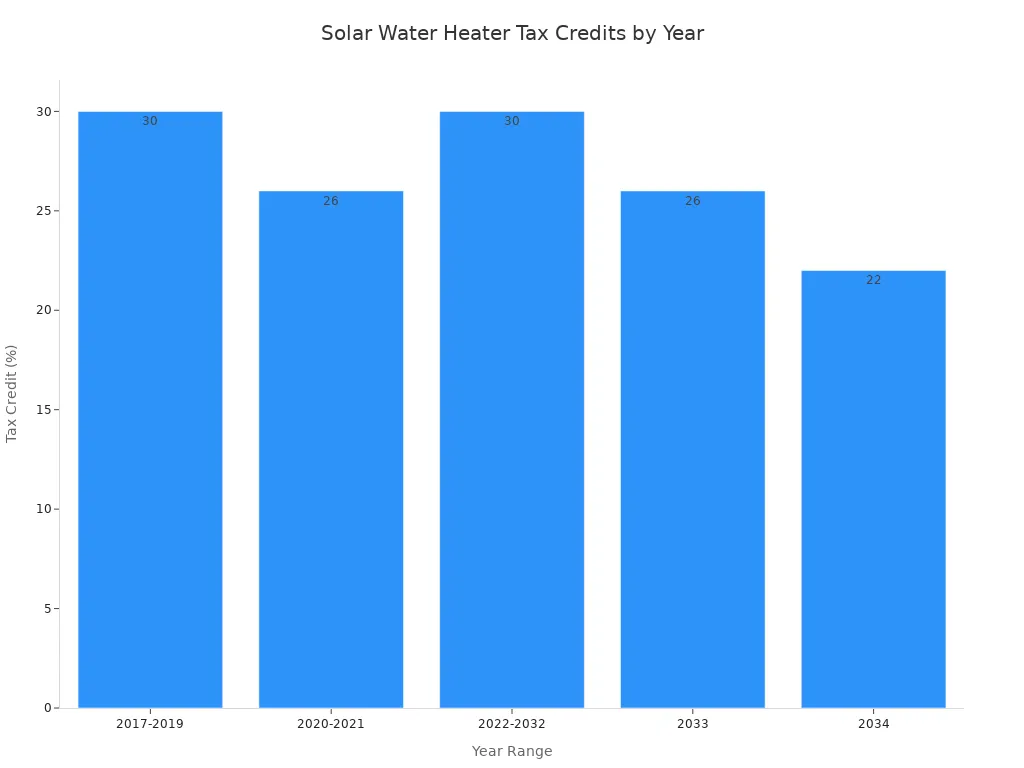
Tip: To get the tax credit, put your solar water heater in your main or second home. Make sure it follows safety rules. Fill out Form 5695 with your tax return.
You need a water heater that fits your family and saves money. Think about how much hot water you use every day. Big families need bigger tanks or faster tankless models. Also, check the energy source:
Water Heater Type | Annual Operating Cost | Efficiency | Lifespan |
|---|---|---|---|
Gas Water Heaters | $120 - $360 | Lower operating costs | 8 - 12 years |
Electric Resistance Water Heaters | $400 - $600 | Less efficient | 10 - 15 years |
Electric Tankless Water Heaters | $75 - $300 | > 95% efficiency | 20+ years |
Gas Tankless Water Heaters | $175 - $500 | < 95% efficiency | 20+ years |
Heat Pump Water Heaters | $104 - $160 | 330 - 410% efficiency | 15+ years |
Solar Water Heaters | N/A | Cost-effective | N/A |
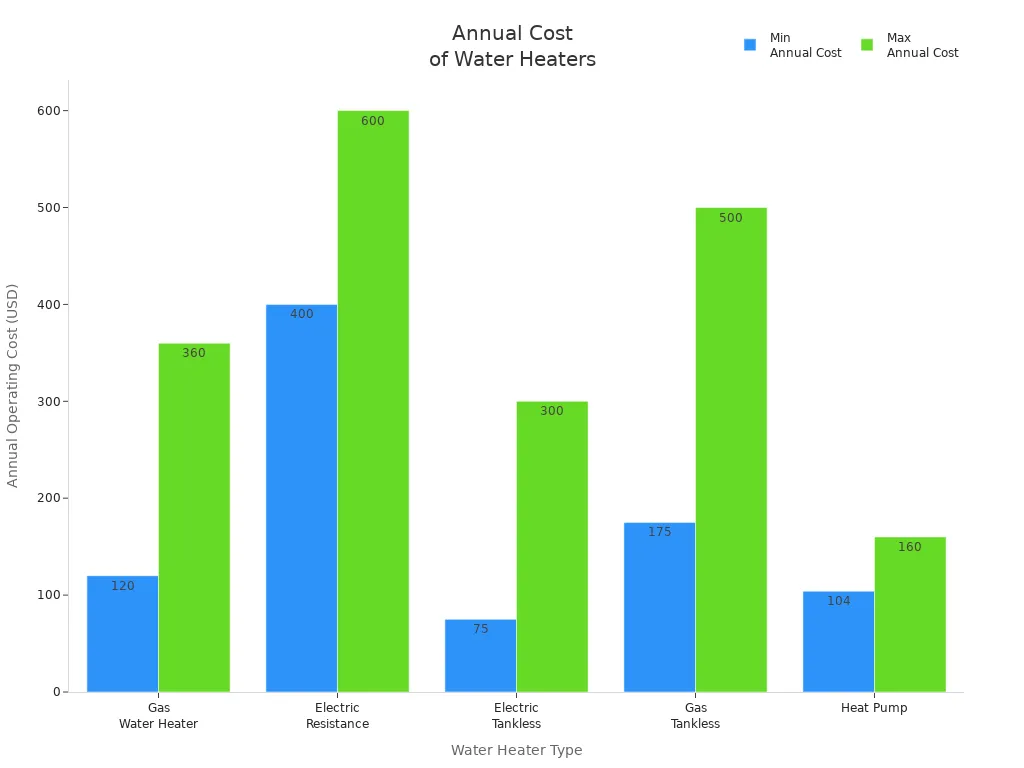
️ Note: Gas heaters are cheaper to run. Electric tankless and heat pump models use less energy. Solar water heaters save the most money over time and are good for the planet.
Before you start replacing your water heater, you need the right tools and materials. Having everything ready will make your project smoother and safer.
You want to gather your tools before you begin. Here’s a handy list to help you get started:
Pipe wrench: You use this to tighten or loosen nuts and bolts on plumbing connections.
Multimeter: This tool helps you check for electrical problems.
Flathead and Phillips screwdrivers: You need these for taking apart and putting together parts of the water heater.
Bucket and towels: These keep your workspace clean and help you catch any water spills.
Teflon tape: You wrap this around threaded connections to stop leaks.
Tip: Lay out your tools in your work area. This way, you won’t have to search for them when you need them.
You also need the right parts to finish the job. Here are the most common materials and parts you’ll use:
New water heater tank
Heating element or gas burner
Thermostat and controls
Dip tube and cold water inlet
Anode rod
Temperature and Pressure Relief (T&P) Valve
Drain valve
Venting parts (for gas models)
Power vent or blower assembly (if needed)
Insulation for the tank
You might not need every part on this list, but it’s smart to check your old water heater and see what needs replacing.
Safety comes first. You should protect yourself while working with plumbing and electricity. Here’s what you need:
Heavy-duty gloves to keep your hands safe from sharp edges and hot surfaces
Safety goggles to protect your eyes from splashes or debris
Face mask if you’re working in a dusty or tight space
⚠️ Note: Never skip safety gear. It only takes a second for an accident to happen. Stay safe and work smart!
Before you start your water heater replacement, you need to get the old unit ready for safe removal. This part is all about shutting off utilities, draining and disconnecting the tank, and following important safety steps.
You want to make sure everything is off before you touch the water heater. Here’s what you should do:
Find your circuit breaker and switch it to "OFF" if you have an electric water heater. For gas models, turn the gas shutoff valve to "OFF" and make sure the pilot light goes out.
Turn off the cold water supply valve. Twist it clockwise until it stops.
Double-check that both power and water are off before you move on.
⚡ Tip: Always test the wires with a multimeter to make sure there’s no electricity running to the unit.
Now you need to empty the tank and disconnect the lines. Follow these steps:
Attach a garden hose to the drain valve at the bottom of the tank. Run the other end to a floor drain or outside.
Open the drain valve and let the water flow out. You can open a hot water faucet in your house to help the water drain faster.
Use a pipe wrench to loosen and disconnect the hot and cold water lines.
If you have a gas water heater, carefully disconnect the gas line. For electric models, remove the wiring after confirming the power is off.
Note: The water can be hot! Wear gloves and goggles to protect yourself from burns or splashes.
Safety comes first during water heater replacement. Here’s how you can stay safe:
Make sure all utilities are off before you start.
Drain the tank completely to avoid spills.
Disconnect all water, gas, or electric lines with the right tools.
Remove the vent pipe if you have a gas heater.
Use a dolly to move the old water heater. Ask someone to help if it’s heavy.
Recycle the old unit at a scrap metal facility or follow your city’s disposal rules.
Clear the area for your new water heater.
Alert: Never rush this part. Taking your time keeps you safe and makes the next steps easier.
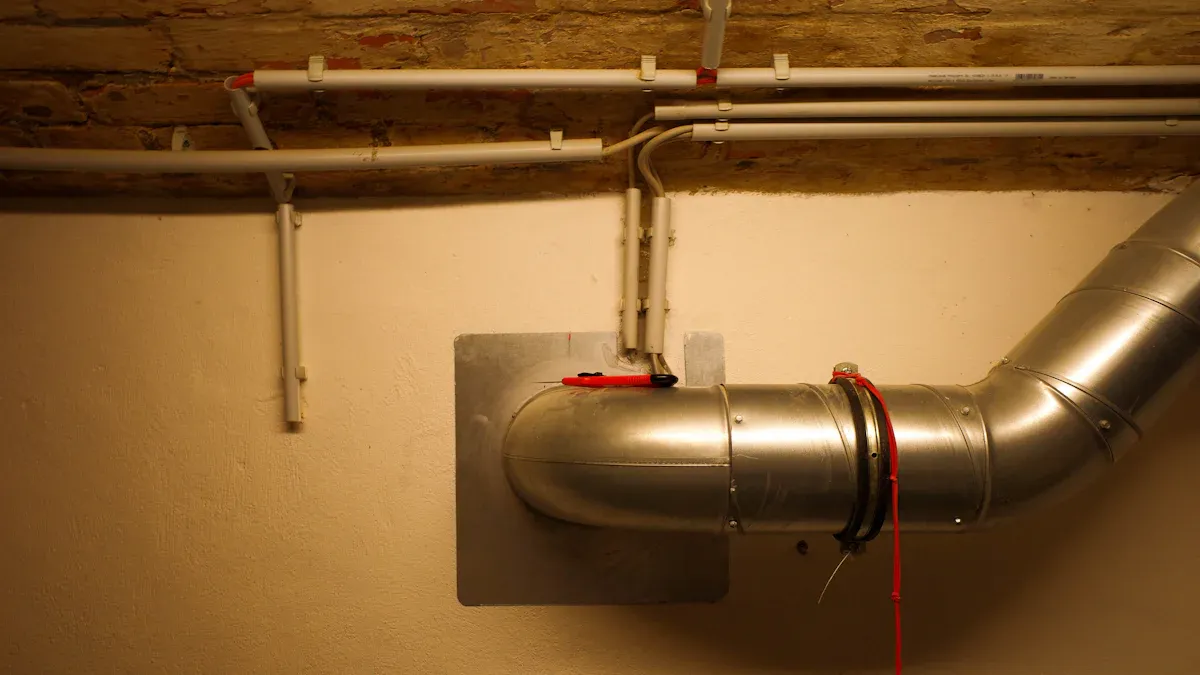
You need to get the old water heater out before you can put in a new one. This part can take some time, but you can do it if you follow each step. Most people finish this job in about 2 to 3 hours if nothing goes wrong.
Here are the main steps to remove your old water heater:
Double-check that you turned off all utilities—water, gas, and electricity.
Disconnect the water lines. Use your pipe wrench to loosen the connections.
Remove the gas line or electric wires. If you feel unsure, stop and call a professional.
Take off the vent pipe if you have a gas model.
Drain the tank fully using a hose.
Move the old unit out of the way. You might need a dolly or a friend to help because water heaters are heavy.
⚠️ Alert: Old water heaters can be tough to remove. You might run into hard-plumbing, stuck connections, or heavy lifting. If you feel uncomfortable with gas or electric work, or if you don’t have the right tools, it’s smart to call a pro.
Common challenges you might face include:
Disconnecting water, gas, or electric lines can be tricky.
Hard-plumbing may need a saw or special tools.
The unit is heavy and awkward to move.
Mistakes with gas or electric lines can be dangerous.
Now you’re ready to put in your new water heater. Take your time and follow these steps for a safe and smooth installation.
Position your new water heater. Place it in the right spot. Make sure it sits level and close to your plumbing.
Connect the plumbing and electrical. Attach the cold water supply and hot water outlet. If you have an electric model, connect the wires after making sure the power is off.
Fill the tank and power it on. Open the water valve and let the tank fill. Watch for air bubbles. When the tank is full, turn on the circuit breaker and set the thermostat.
Tip: If you have a gas water heater, you need to connect the gas line and check for leaks. If you’re not sure how to do this, call a licensed plumber or technician.
Many people finish a basic water heater replacement in one day. If you hire a pro, you can often get same-day installation. The average cost for a standard replacement ranges from $800 to $2,500, depending on the type and size.
Switching to a solar water heater is a smart move for your wallet and the planet. The process is a bit different from a regular water heater replacement, so you want to plan ahead.
Here’s how you can replace your old system with a solar water heater:
Assess your needs and site. Figure out how much hot water you use and where the sun hits your roof best.
Choose the right system. Pick between active or passive solar water heaters. Think about your budget and hot water needs.
Get permits and select equipment. You may need a permit. Choose your solar collectors and storage tank.
Roof installation. Mount the solar collectors on your roof. Make sure they are secure and sealed against leaks.
Plumbing connections. Connect insulated pipes from the collectors to your new water heater.
Install controls and safety features. Add the right controls and safety devices to keep your system running well.
Professional installation. Solar water heater replacement often needs a pro. They know how to handle the plumbing, electrical, and roof work. They also make sure everything meets local codes.
️ Note: Solar water heater installers usually have special training. They know about renewable energy, plumbing, and electrical work. They also keep up with the latest technology and safety rules.
Regular maintenance keeps your solar water heater working well. Clean the collectors and check the system every year.
If you ever feel unsure about any part of water heater replacement—especially with gas, electric, or solar systems—don’t risk it. Call a licensed professional. Your safety comes first.
After you finish your water heater replacement, you want to make sure everything is dry and safe. Leaks can cause big problems if you miss them. Here’s a simple way to check for leaks:
Check the base of the water heater. Look for any water pooling under the unit.
Inspect the tank. Watch for rust, corrosion, or cracks on the surface.
Examine the connections. Feel around the inlet and outlet pipes for moisture or drips.
Inspect the pressure relief valve. Test it and see if there’s any sign of moisture.
Check for water damage. Look at the floor and walls nearby for stains or mold.
️♂️ Tip: Use a dry paper towel to wipe around each connection. If it gets wet, you may have a leak.
Now it’s time to see if your new water heater works. Open a hot water faucet and let the water run for a few minutes. You should feel the water get warm. Listen for any strange noises from the tank. Watch the thermostat and make sure it reaches the set temperature.
If you installed a solar water heater, check the control panel. Make sure the system shows normal operation. Look at the solar collectors and pipes for leaks or drips.
✅ Note: If you smell gas or see sparks, turn off the unit right away and call a professional.
Sometimes, things don’t go as planned after a water heater replacement. Here are some common problems and what they mean:
Issue | Description |
|---|---|
Plumbing Crossover | Cold and hot water pipes are mixed up. You get the wrong water temperature at your faucets. |
Leak in Plumbing System | Pipes expand or contract. You notice temperature changes or water on the floor. |
Loose Thermocouple Connection | Gas water heater doesn’t heat well. The water stays cold or lukewarm. |
You might also run into these issues:
You run out of hot water too fast. The tank may be too small or have sediment inside.
The water never gets hot enough. The heating element or thermostat could be faulty.
Cold and hot water mix together. A broken dip tube can cause this.
If you can’t fix the problem, don’t worry. Call a licensed plumber or technician for help.
You want to make sure your water heater is safe before you finish the job. Take a few minutes to check these important items. This step helps you avoid problems later and keeps your home safe.
Safety Check Item | Description |
|---|---|
Fuel Gas Piping | Check if the gas piping holds pressure and verify the supplied gas pressure. |
Combustion Gas Exhaust Flues | Inspect flue pipe for proper labeling and materials. |
Relief Valve | Ensure the relief valve is the correct size and pressure rating. |
Relief Valve Discharge Piping | Confirm discharge piping is installed according to codes and does not cause hazards. |
️ Tip: Always double-check these items before you turn on your new water heater. Safety comes first!
Regular maintenance keeps your water heater working well and saves you money. You should do a full check at least once a year. If you live in an area with hard water, you may need to check more often.
Flush the Tank Annually: This removes sediment and helps your heater run better.
Check the Anode Rod: Look for corrosion and replace it if needed to stop rust.
Inspect for Leaks: Catch small leaks early to avoid big repairs.
Test the Pressure Relief Valve: Make sure it works for your safety.
Adjust the Temperature: Set it to 120°F for best efficiency and safety.
Descale the unit every year to prevent mineral buildup in tankless models.
Clean the inlet filter to keep water flowing smoothly.
Inspect the venting system so exhaust can escape safely.
Check for error codes and fix problems using your manual.
Set the thermostat between 115-140°F for safe and efficient heating.
Turn off heating elements before you start any maintenance.
Keeping up with these tasks helps your water heater last longer. You also save energy and lower your utility bills. Flushing the tank and insulating pipes can make a big difference in how much you spend each month.
Sometimes you need help from a professional. Watch for these signs:
You hear popping or rumbling noises from the tank.
Water temperature changes often or stays cold.
Rusty or discolored water comes from your taps.
You see leaks or drips near the heater.
Your energy bills go up for no clear reason.
Your water heater is older than 8-12 years.
If you notice any of these problems, call a licensed plumber or technician right away. Quick action can prevent bigger issues and keep your home safe.
You now know how to change your water heater step by step. Safety is the most important thing. Always look for leaks. Set the temperature to 120°F. Call a professional if you see gas or rust. Do yearly checks to keep your system working well. Fix small problems quickly. Solar water heaters help you save money and have cool features:
Benefit | Description |
|---|---|
Smart Controls | You can watch and change your system from anywhere. |
Improved Efficiency | You get more hot water and use less energy. |
Environmental Impact | You help the planet by lowering your carbon footprint. |
Keep safe, do regular maintenance, and enjoy hot water for a long time.
Most people finish in 2 to 6 hours. If you hire a pro, the job often takes less than a day. Solar water heater installs may take longer.
You can do some steps, like site prep or mounting brackets. For plumbing, electrical, and roof work, you should call a licensed installer. Safety comes first!
Check how many people live in your home. For a family of four, you usually need a 50-gallon tank or a solar system sized for your daily use.
Clean the solar collectors once a year. Check for leaks and test the controls. Flush the system if you see mineral buildup. Regular care keeps your system efficient.


