

Views: 0 Author: Site Editor Publish Time: 2026-01-21 Origin: Site


A solar water tank is a crucial component of a solar thermal system, designed to store the heat generated by solar panels for later use. It provides a sustainable and efficient way to heat water by capturing sunlight and storing it for when it is needed, even during times when the sun isn’t shining. One common question many homeowners have is whether a solar water tank can keep water hot overnight or on cloudy days, when solar energy generation is reduced. The answer largely depends on the quality of the tank’s insulation, the amount of heat stored during daylight hours, and how well the system is maintained. In this article, we will explore how solar water tanks function, how they retain heat, and whether they can continue providing hot water during periods of low sunlight.
A solar water tank is an essential component in a solar thermal system. Solar thermal panels, often installed on the roof or other sun-exposed areas, collect sunlight and convert it into heat. This heat is then transferred to the water stored in the solar water tank through a heat exchanger or directly via the circulating fluid. As the solar panels heat the water, it is stored in the tank, ready for use as needed for bathing, cooking, or space heating.
The tank functions by maintaining the collected heat over a period of time. The hot water remains in the tank, even when the solar panels are no longer actively collecting energy, allowing you to have access to warm water throughout the day and night.
One of the key features of a solar water tank is its insulation, which plays a vital role in maintaining the temperature of the stored water. Solar water tanks are typically well-insulated with materials such as foam or fiberglass, which significantly reduce heat loss.
Tank Insulation: The outer layer of the tank is designed to minimize heat transfer between the water inside and the cooler air outside, ensuring that the hot water remains at a stable temperature for as long as possible.
Thermal Loss Minimization: Effective insulation helps the tank retain heat for extended periods, even when there’s no direct sunlight. This allows the stored hot water to stay warm for several hours or even overnight, depending on the quality of the tank and insulation.
The insulation in a solar water tank plays a crucial role in maintaining the water temperature by minimizing heat loss. Without proper insulation, the heat stored in the water would dissipate quickly into the surrounding environment, reducing the tank’s efficiency and the amount of usable hot water.
Heat Retention: Solar water tanks are typically insulated with materials like polyurethane foam or fiberglass. These materials have excellent thermal resistance properties, meaning they significantly slow down the process of heat transfer. By keeping the heat trapped inside the tank, the insulation ensures that the water remains hot for hours or even overnight without the need for additional energy sources.
Reduced Heat Loss: The thickness and quality of the insulation directly impact the level of heat retention. The thicker the insulation, the better the tank can maintain the water temperature for extended periods, even when there is no active solar heating. This is particularly important in colder climates or during times of lower solar energy availability.
In addition to the insulation material, the design of the solar water tank itself plays a key role in its ability to retain heat. Several factors come into play:
Tank Material: The material used for the tank's construction is essential for both heat retention and durability. Most solar water tanks are made from materials like steel or stainless steel, which are good conductors of heat, helping to transfer warmth from the heated fluid to the water efficiently. The inner lining of the tank may be coated with ceramic or enamel to resist corrosion and prevent heat loss.
Tank Thickness: The thickness of both the insulation and the tank walls is critical to minimizing heat loss. Thicker insulation around the tank prevents heat from escaping, while thicker walls help retain the stored heat for longer periods. This is especially important for systems that need to function well during low-sun or nighttime periods when solar energy is not being actively collected.
Tank Design: A well-designed solar water tank incorporates features like a bottom-to-top water heating system, where cold water enters from the bottom and the hot water rises to the top, ensuring that the warmest water is always at the top of the tank for immediate use. Proper tank design also ensures that heat is evenly distributed and not lost through poorly designed fittings or openings.
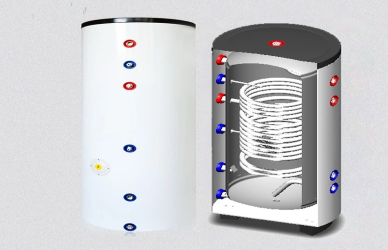
Even during cloudy days when sunlight is limited, a solar water tank can still provide hot water by relying on the heat that was previously stored. While solar thermal panels are most effective in direct sunlight, they can still capture and convert diffused sunlight—sunlight that is scattered by clouds—into heat. This means that even on overcast days, solar collectors can still charge the water tank, though at a reduced rate compared to clear, sunny days.
The key advantage of a solar water tank is its ability to store heat for use when sunlight is not available. When the solar panels collect heat during the day, the energy is transferred to the water tank. This stored heat remains in the tank due to effective insulation that minimizes heat loss. On cloudy days, this stored energy can be used to provide hot water, reducing the reliance on additional energy sources like electric or gas heaters. This makes solar water systems particularly valuable in areas with inconsistent sunlight.
Solar collectors play a critical role in maintaining the effectiveness of a solar water tank during cloudy days. While solar panels capture less sunlight when it's overcast, they can still collect diffused sunlight and convert it into usable heat. The amount of energy generated will be lower compared to a sunny day, but the system can continue to heat the water over time. For cloudy or low-light conditions, the size and efficiency of the solar collectors are important in determining how much heat can be captured. Some systems are designed with larger or more efficient collectors, which can store more heat, allowing the tank to continue supplying hot water even during periods of reduced sunlight.
A major benefit of solar water tanks is their ability to retain heat overnight, ensuring hot water is available even when no new heat is being generated by the solar collectors. This is largely due to the quality of insulation in the tank and the initial water temperature before sunset.
Well-insulated solar water tanks minimize heat loss by preventing the hot water from cooling too quickly. Materials like polyurethane foam or fiberglass are commonly used for insulation, reducing heat transfer to the surrounding environment. These materials allow the tank to retain heat for several hours or even overnight, ensuring a steady supply of hot water after the sun sets.
Initial Water Temperature: Water that is heated to a higher temperature during the day will stay warm longer. If the water is cooler in the evening, it may lose heat more quickly.
Insulation Quality: Thicker insulation keeps heat in more effectively, helping maintain water temperature longer overnight.
Tank Size and Water Volume: Larger tanks retain heat longer but require more energy to heat initially. If the tank size is too large for the system, it may not retain heat as efficiently overnight.
External Temperature: Colder surroundings cause faster heat loss. In colder climates, even well-insulated tanks may experience higher heat loss.
A well-insulated solar water tank can keep water hot for several hours to a day, depending on the tank's insulation and the initial temperature of the water.
No, a solar water tank relies on the heat absorbed by the solar collectors, and it stores this energy without needing electricity to maintain the water temperature.
While sunlight exposure is crucial for charging the tank, a solar water tank can still function with limited sunlight, as long as the solar collectors are properly placed to capture any available light.
Ensure that the tank is properly insulated, check for any leaks in the system, and perform regular maintenance to keep the insulation and components in good condition.
In conclusion, solar water tanks are effective at retaining heat overnight and during cloudy days, providing a reliable source of hot water even when solar energy generation is limited. The key to their effectiveness lies in proper insulation, which minimizes heat loss and ensures the water remains hot for extended periods. Regular maintenance, including cleaning and checking for leaks, helps maintain the tank's efficiency. With optimal insulation and care, solar water tanks can deliver hot water reliably throughout the day and night, making them a sustainable and energy-efficient solution for homeowners.


