

Views: 0 Author: Site Editor Publish Time: 2026-04-23 Origin: Site


Homeowners often search for smart energy upgrades to reduce high utility bills. Traditional water heating consumes roughly 14% to 18% of typical household energy. This massive energy draw forces many families to seek cheaper, sustainable alternatives. A solar hot water heater offers a compelling way to offset these monthly costs. The technology operates independently from standard utility grids. It can also run seamlessly alongside them. These setups capture thermal energy directly from the sun. They then transfer this free heat into your domestic water supply.
While highly effective at cutting heating costs, modern buyers face a complex reality. You must carefully evaluate traditional solar thermal systems. You need to compare them against falling solar photovoltaic (PV) panel prices. You must also consider advanced heat pump technology. In this guide, you will learn exactly how these solar systems function. We will explore how you can match hardware to your specific climate. You will also discover how to navigate tax incentives and choose the best long-term solution.
Core Function: A solar hot water heater slashes water heating bills by 50% to 80% by capturing solar heat, but nearly all systems require a gas or electric backup for cloudy days.
Climate dictates hardware: Passive systems work in non-freezing zones, while Active Indirect systems with evacuated tubes are required for extreme cold (down to -40°F).
Financials & Compliance: Median full-system installation costs hover around $9,000. Buyers must look for SRCC OG-300 certified systems to qualify for the 30% Federal Clean Energy Tax Credit.
The Modern Alternative: For many homes, installing a full-home Solar PV system paired with an electric heat pump water heater offers a better long-term ROI than a standalone solar thermal system.
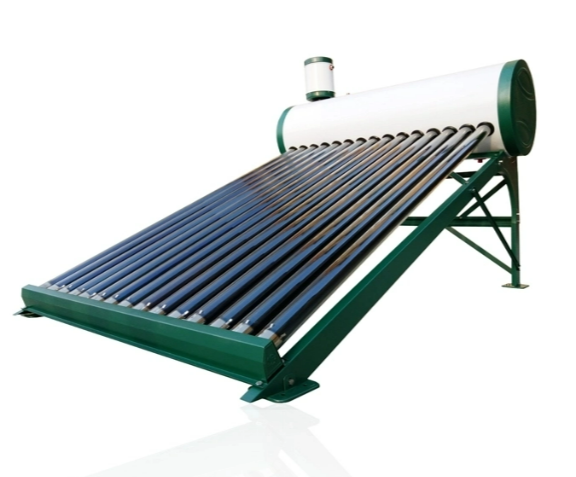
Understanding the hardware helps clarify what you are actually installing. Solar thermal technology relies on a few critical elements. They work together to capture, transfer, and store solar heat. You need to know these parts before requesting quotes from local contractors.
Every standard system utilizes four main components to function properly. We can break down the primary architecture as follows:
Solar Collectors: These sit on your roof to trap solar radiation. They act like a greenhouse to concentrate the sun's heat.
Heat Transfer Fluid (HTF): This fluid circulates through the collectors. It absorbs the trapped heat. Installers use either pure water or non-toxic antifreeze.
Heat Exchanger & Storage Tank: This unit transfers heat from the fluid into your domestic water supply. Standard capacities usually range from 80 to 120 gallons. A larger tank is necessary because peak sun hours rarely match peak shower times.
Backup System: Nearly every installation requires an electric or gas assist mechanism. It guarantees hot water during heavy usage. You will also need it during sustained overcast weather.
The method used to move the fluid defines the system type. Plumbers classify these into two distinct driving mechanisms.
Active Systems: These utilize electric pumps to circulate fluid. They rely on digital controllers to monitor temperature differences. They shut off when the roof gets too cold. They offer high efficiency. However, you must maintain the moving parts regularly.
Passive Systems: These completely rely on natural convection. Hot water naturally rises while cold water sinks. They cost less upfront. They have zero moving parts. This makes them highly durable. Unfortunately, they deliver significantly lower efficiency than active options.
You must match specific technology to local weather conditions. Buying the wrong collector leads to poor performance or catastrophic pipe bursts. Each design serves a very specific geographic need.
Batch systems feature a simple design. A water tank sits inside a glazed, insulated box directly on the roof. The sun heats the actual tank.
They work best in the Sunbelt. You should only use them in non-freezing climates. They are highly cost-effective and remarkably reliable. However, the exposed pipes will freeze and burst in harsh winters. Do not install them if your area experiences regular frost.
Flat-plate designs represent the standard for residential setups. They consist of a dark absorber plate under a glass cover. Tubes run through the box to carry the fluid.
They operate best in moderate climates. Budget-conscious households often prefer them. Two standard panels can typically meet 50% of a four-person family's demand. The primary downside is heat loss. They lose efficiency quickly in high winds or extreme cold.
Evacuated tubes feature advanced engineering. They contain rows of parallel, transparent glass tubes. Each tube features a vacuum gap. This vacuum acts as perfect insulation.
They perform incredibly well in extreme cold. They handle heavy cloud cover easily. Commercial applications often rely on them. Manufacturers make them from high-strength borosilicate glass. They can operate efficiently in temperatures as low as -40°F. However, they cost roughly double per square foot compared to flat-plate models.
Collector Type Comparison Chart
Collector Type | Best Climate | Key Advantage | Primary Limitation |
|---|---|---|---|
Batch / ICS | Tropical / Sunbelt | Lowest cost, zero moving parts | Freezes easily in cold weather |
Flat-Plate | Moderate / Mild | Excellent balance of cost and performance | Loses heat in high winds |
Evacuated Tube (ETC) | Extreme Cold / Cloudy | Works perfectly down to -40°F | Highest upfront installation cost |
Engineering risks become real when temperatures drop below freezing. A reliable Solar Water Heater must protect itself from ice damage. Post-purchase operational tasks also dictate how well the system performs over time.
The type of fluid pumped to the roof determines your freeze risk. Direct systems pump your actual household water through the roof collectors. They are strictly reserved for warm climates. If a sudden freeze hits, the water expands. The collector tubes will rupture.
Indirect systems use a closed-loop design. They pump an antifreeze mixture up to the roof. The fluid absorbs heat. It then travels down to a heat exchanger inside your water tank. The antifreeze never mixes with your drinking water. Indirect systems are mandatory for regions experiencing freezing temperatures.
Overheating and freezing both destroy solar hardware. Drainback mechanisms offer a crucial protection feature. The system includes a small reservoir tank. When the electric pump shuts off, gravity takes over. All the fluid drains out of the roof collectors.
It pools safely in the indoor reservoir. This prevents the fluid from stagnating and boiling during summer power outages. It also ensures the roof panels remain completely empty on freezing winter nights. Empty pipes cannot burst.
Solar thermal setups require ongoing attention. They are not entirely "set it and forget it" appliances. Routine maintenance is required every 3 to 5 years. You should hire a certified solar thermal contractor for this work.
Key maintenance tasks include flushing the antifreeze. Propylene glycol degrades and turns acidic over time. Contractors must also check the pump stations for wear. They will verify the digital controller sensors. Finally, they must clean the collector glazing. Dust significantly blocks solar radiation. You must clean panels manually in dry climates where rain cannot naturally wash them.
You must evaluate the bottom-line financial impact before installing a system. The initial price tag can look steep. However, energy savings and federal incentives often balance the scale.
Your initial investment depends heavily on system complexity. Simple passive setups or DIY kits average around $3,000. These work well for off-grid cabins or warm climates.
Most residential homes require professionally installed active systems. These range from $8,000 to over $10,000. The exact price varies based on collector type, storage tank size, and local labor rates. Evacuated tube systems generally sit at the higher end of this spectrum.
A properly sized system reduces annual water heating costs by 50% to 80%. Your specific break-even period varies heavily. Local utility rates play a massive role. Homes paying high electric rates see faster returns. Your geographic sun exposure also dictates savings. A home in Arizona breaks even faster than one in Seattle.
Federal tax incentives significantly lower the barrier to entry. The 30% Federal Clean Energy Tax Credit remains valid through 2032. You can claim this credit by filing IRS Form 5695 alongside your annual taxes. It directly reduces your federal tax liability.
However, the government mandates strict quality standards. You cannot buy unverified equipment. You must perform an SRCC certification check. To qualify for rebates and ensure durability, the individual collectors must hold SRCC OG-100 certification. Furthermore, the entire integrated system must pass SRCC OG-300 standards. Always ask your contractor to provide these specific certification numbers before signing a contract.
The energy industry is changing rapidly. You deserve unbiased, high-level strategic advice. Modern buyers must compare single-use thermal setups to whole-home electrification strategies.
A traditional solar thermal setup is highly efficient at its specific job. However, it only heats water. You cannot repurpose its energy. In the middle of summer, your tank might reach maximum capacity by noon. The system stops collecting heat. Excess thermal energy generated in the afternoon goes completely to waste. It cannot power your lights. It cannot run your air conditioning.
The industry standard is actively shifting. Solar PV panel costs have experienced a sharp decline over the past decade. Most experts now recommend a different approach.
You use your available roof space for PV panels. These generate electricity. You then use that electricity to power a highly efficient electric Heat Pump Water Heater. Heat pumps pull ambient heat directly from the surrounding air. They use minimal electricity to run a compressor. This combination provides greater overall household ROI. If the heat pump does not need power, the PV panels send electricity to your appliances or the grid.
System Strategy Comparison
Feature | Solar Thermal System | Solar PV + Heat Pump |
|---|---|---|
Energy Output | Thermal heat only | Electricity for entire home |
Space Efficiency | High (needs less roof space) | Low (needs large roof array) |
Excess Energy | Wasted once tank is full | Powers home appliances or grid |
Maintenance Needs | Moderate (fluid flushes, pumps) | Low (solid-state panels) |
Despite the shift toward PV, thermal setups still win in specific scenarios. You should choose solar thermal when roof space is severely limited. Thermal collectors generate significantly more energy per square foot than PV panels. Two small flat plates can do the water-heating work of six large PV panels.
They also excel for off-grid properties. Cabins requiring fully independent heating without heavy electrical loads rely heavily on them. Finally, they dominate specialized high-volume applications. Heating large swimming pools using unglazed plastic thermal collectors remains the most efficient method available today.
A solar thermal system remains a robust, carbon-free solution. It works exceptionally well for slashing utility bills. You simply must ensure the hardware matches your geographic climate. Active indirect setups protect freezing regions, while passive direct systems serve warm areas perfectly. Flat-plate collectors balance cost, while evacuated tubes conquer the extreme cold.
Before moving forward, you should apply strict purchasing criteria. Mandate contractor qualifications and check references. Always verify SRCC OG-300 certifications for tax compliance and reliability. Finally, run a comparative cost analysis against a modern solar PV and heat pump setup. Securing the right technology for your roof space guarantees lasting energy independence.
A: Yes, they still provide hot water. The systems use heavily insulated storage tanks to hold heated water from the daytime. Furthermore, nearly all setups include a mandatory gas or electric backup system. If the sun remains hidden for several days, the backup element automatically engages to ensure your showers stay warm.
A: High-quality roof collectors boast an expected lifespan of 20 years or more. However, the moving components degrade faster. You will likely need to replace the electric circulation pumps and digital controllers around year 10. Regular fluid flushes help extend the overall system lifespan.
A: Not if installed correctly. Professional contractors use specialized mounting hardware. These mounts seal securely to prevent leaks. They distribute the panel weight safely across roof trusses. You should evaluate your roof's age before installation. If you need new shingles soon, replace them before mounting the heavy thermal collectors.
A: Direct systems pump your actual household drinking water through the roof panels. They only suit warm climates. Indirect systems pump a separate antifreeze mixture to the roof. The antifreeze absorbs heat and transfers it to your water via a heat exchanger. Indirect setups provide mandatory safety for freezing climates.


