

Views: 0 Author: Site Editor Publish Time: 2025-12-09 Origin: Site


You can do plumbing installation well if you have good help and know about safety. Learning the basics helps you not make mistakes and keeps your house safe. A simple plumbing guide gives you the skills to do easy jobs. Today, new plumbing systems do more than just make life easier. Energy-saving systems, like the SOLARAVEN solar water heater from Changzhou Raven New Energy Technology Co.,Ltd., help you spend less money and lower your carbon footprint.
Hybrid water heaters can use up to 60% less energy than regular electric heaters.
Solar water heaters can make your water heating bills 50-80% lower.
Solar systems often get Solar Energy Factor values from 2.0 to 5.0, which means they save a lot of energy.
Picking energy-saving choices helps your home and the environment for a long time.
Learn the basics of plumbing. This helps you avoid mistakes. It also keeps your home safe.
Always look at local building codes. Get the right permits before you start any plumbing job.
Use the correct tools and materials for your plumbing work. This makes your system last longer and work better.
Plan your plumbing layout with care. This can save you money. It also helps stop problems later.
Check your plumbing system often for leaks and clogs. This keeps it working well.
You can do many plumbing jobs by yourself. If you use a simple guide and know the basics, you can fix things. DIY plumbing basics let you do small repairs and put in new parts. Many people fix leaky faucets or change showerheads at home. Some also unclog drains without help. If you get ready, you can try bigger jobs. You might put in a new toilet or connect pipes.
Tip: Always look at your local building codes before you start. Some jobs need permits or someone to check your work.
Here are the main steps for a beginner plumbing project:
Get permits from your local office.
Put pipes underground for water and waste.
Place pipes in walls and floors during rough-in.
Hook up your plumbing to the main water and sewer lines.
Put in fixtures like sinks, toilets, and faucets.
Test and check the whole system before you finish.
You can do many of these steps if you take your time and learn first. Some hard jobs, like putting in a solar water heater, may need a pro.
You need some basic skills and tools for plumbing jobs. First, learn how your plumbing system works. This helps you stop mistakes and fix things fast.
Key skills for DIY plumbing are:
Fixing leaky faucets
Unclogging drains
Changing showerheads and faucets
Putting in a new toilet
Doing simple pipe repairs
Handling plumbing emergencies
Knowing when to call a pro
You should get the right tools before you start. Common plumbing tools are:
Wrenches and pliers
Pipe cutters and tubing cutters
Plungers
Basin wrench and pipe wrenches
Propane torch and hack saw
Note: Safety is always most important. Wear gloves and eye protection when you work with pipes and tools.
With good prep, you can do many plumbing jobs and keep your home working well. This guide will help you feel sure as you learn more about plumbing.
You need to know the basic parts of a plumbing system before you start any project. The main components of a residential plumbing system work together to bring clean water in and move waste out. Here is a table that shows the key parts and what they do:
Component | Description |
|---|---|
Water Supply Line | Brings water into your home from a city source or private well. |
Drain-Waste-Vent (DWV) System | Removes wastewater and keeps air pressure balanced in your plumbing system. |
Pipes and Fittings | Carry water to and from fixtures; fittings connect and change pipe direction or size. |
Fixtures and Appliances | End-points like sinks, toilets, showers, and dishwashers. |
Valves and Shutoffs | Control water flow to your whole house or to single fixtures. |
You will find these parts in every home plumbing system. Pipes act as the highways, moving water to where you need it. Fittings help pipes turn corners or connect to different sizes. Fixtures and appliances are where you use water every day. Valves let you stop water if you need to fix something.
A residential plumbing system has two main jobs: bringing in fresh water and taking away waste. The water supply line brings clean water to your fixtures. Valves and shutoffs help you control this flow. Pipes and fittings move water to sinks, toilets, and appliances.
The drainage system removes wastewater from your home. The drain-waste-vent (DWV) system keeps air moving so water flows smoothly. P-Traps and soil stacks help stop bad smells and keep your plumbing system safe. In some homes, the main drain leads to a septic tank instead of a city sewer.
Proper drainage protects your house from water damage. Gutters, downspouts, and pipes work together to move rainwater away from your home. Good drainage keeps your foundation strong and prevents flooding.
Tip: Always check your plumbing system for leaks or clogs. Quick fixes help you avoid bigger problems later.
A well-designed home plumbing system keeps your water clean and your house safe. Knowing how the residential plumbing system works helps you plan repairs and upgrades with confidence.
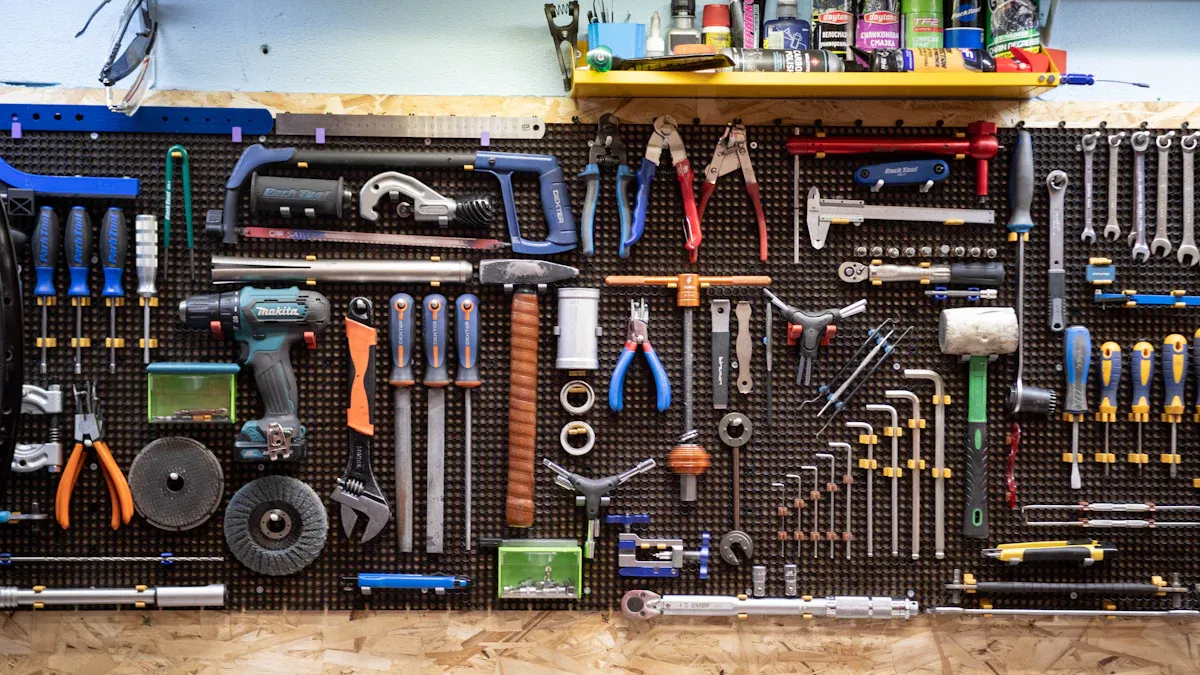
You need the right tools to work on your plumbing system. These tools help you fix leaks, cut pipes, and clear clogs. If you want to start with basic plumbing jobs, you should have these essential tools:
Adjustable wrench lets you tighten or loosen nuts and fittings on pipes.
Faucet key helps you open and close spigots.
Hacksaw cuts through pipes and hardware.
Plungers clear clogs in toilets and sinks.
Hand auger breaks apart clogs deep in drains.
Inspection camera shows you problems inside pipes.
Goggles protect your eyes while you work.
You can use these tools for many plumbing tasks. Each tool has a special job in your plumbing system. If you keep your tools organized, you will find it easier to fix problems quickly.
Tip: Always wear goggles when you use cutting tools or work with chemicals. Safety keeps you from getting hurt.
You will see different materials in every plumbing system. These materials help water move safely through your home. Some materials work better for certain jobs. Here are the most common materials you will use:
Copper is lightweight and resists corrosion. You can use it for drinking water pipes. It is also recyclable.
CPVC stands up to high temperatures and stops bacteria from growing. You will find it in hot water lines.
PEX is flexible and inexpensive. It reduces water flow resistance and works well in many plumbing systems.
You should pick the right material for your plumbing system. Each material has strengths for different parts of your home. If you choose wisely, your plumbing system will last longer and work better.
Note: Always check which materials fit your local plumbing codes before you start a project.
You need a good plan before you start plumbing. Planning helps you not make mistakes. It also saves you money. When you design your plumbing, think about where sinks, toilets, and showers will go. You should also think about where appliances need water. Plan how pipes will move through walls, floors, and ceilings.
Here are some important steps for planning your plumbing:
Ask for help from pros if you are not sure.
Put fixtures in places that are easy to reach.
Think about adding rooms like a bathroom later.
Plan where water and waste pipes will go.
Try to save water when you plan your system.
Make sure everyone can use the fixtures easily.
Plan for air flow so bad smells do not build up.
Watch your budget so you do not spend too much.
Draw a simple map of your house. Mark where each fixture will be. Show where every pipe will go. This map helps you see your whole plumbing plan. You can find problems before you start working.
Tip: Put fixtures close together if you can. This makes pipes shorter and costs less money.
You need to pick the best pipes for your plumbing. Each pipe type has its own good and bad points. Some pipes cost more than others. Your choice changes how long your plumbing will last.
Here is a table that shows how different pipes compare:
Pipe Type | Durability | Cost | Advantages | Disadvantages |
|---|---|---|---|---|
Copper | High | High | Durable, bacteria-resistant, recyclable | Expensive, can corrode in acidic environments |
PEX | Moderate | Moderate | Flexible, resistant to scale | UV sensitive, concerns about chemical leaching |
PVC | Moderate | Low | Lightweight, inexpensive, corrosion-resistant | Not suitable for hot water, can degrade under UV |
CPVC | Moderate | Moderate | Higher temperature resistance than PVC | More expensive than PVC, can become brittle |
Braided | High | High | High pressure resistance, flexible | Limited applications, requires professional installation |
ABS | High | Moderate | Strong, impact-resistant | Not suitable for outdoor use, less flexible |
Cast Iron | Very High | High | Extremely durable, sound-dampening | Heavy, prone to rust, expensive to repair |
HDPE | High | Low | Corrosion-resistant, eco-friendly | Sensitive to UV, can deform under high temperatures |
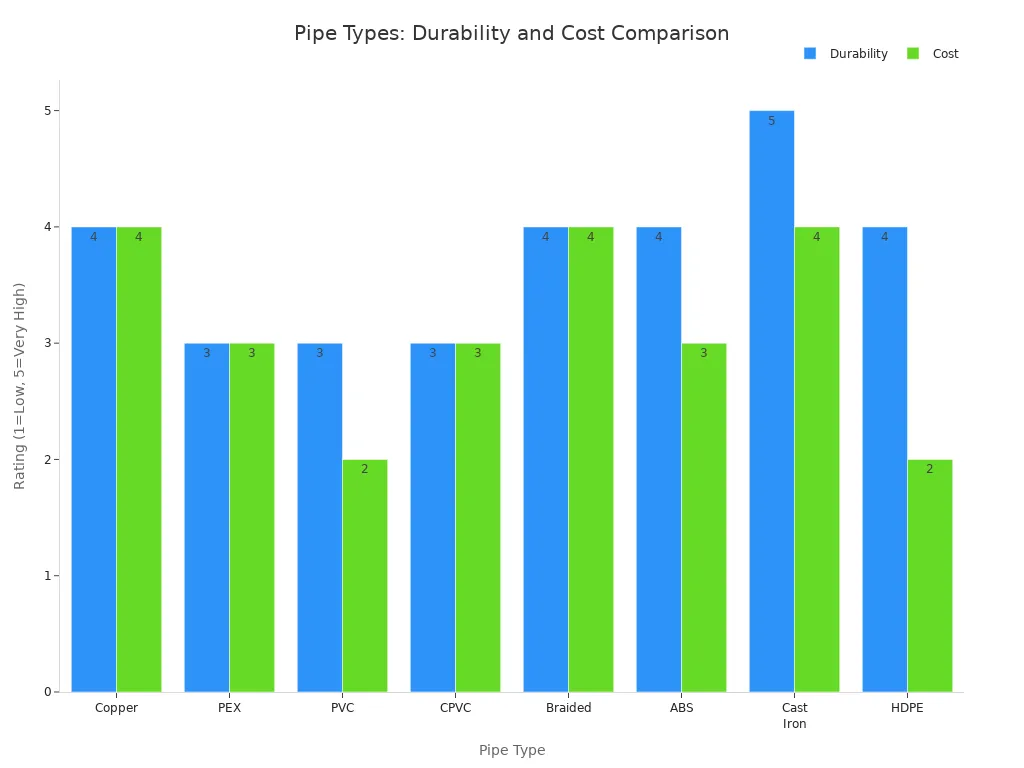
Copper pipes last a long time and are strong. PEX pipes are easy to bend and fit in most homes. PVC and CPVC pipes are good for drains and hot water. Cast iron and HDPE pipes last many years but cost more and need special tools.
Note: Always check your local rules before you pick pipes. Some places have rules about which pipes you can use.
A good plumbing plan keeps your home safe and saves money. If you plan well and use the right pipes, you will not have big repairs later.
You need a permit before you start any plumbing project. Permits help you follow safety rules and plumbing codes. Local officials use permits to check your work and make sure everything is safe. Inspections can find problems like leaks, bad venting, or wrong pipe sizes. These issues can cause health risks or damage your home.
If you skip the permit, you might face legal trouble. You could get fines or have to redo your plumbing. Permits also protect your investment. When you sell your house, buyers and banks want proof that your plumbing meets standards. Proper permits make your home more valuable.
Note: Always check local regulations before starting plumbing installation. Some jobs, like solar water heater setups, may need extra permits or inspections.
Plumbing codes tell you how to install pipes, fixtures, and water heaters. You must follow these rules to keep your system safe and working well. Codes can change from one city to another, so always ask your local office for the latest rules.
Here are important plumbing codes to check before you begin:
Follow the National Uniform Plumbing Code.
Make sure drainpipes slope the right way.
Install cleanouts for easy access.
Do not cut notches in joists.
Use the correct size for fittings and pipes.
Pick the right material for your pipes.
Check that water pressure is strong enough.
Vent drainpipes properly.
Place fixtures with enough space.
Keep the building structure safe.
Solar water heater installations, like the SOLARAVEN system, often have special code requirements. You may need to use certain pipe materials or add extra safety features. Ask your local building office about rules for solar water heaters before you start.
Tip: Following plumbing codes helps you avoid mistakes and keeps your home safe.
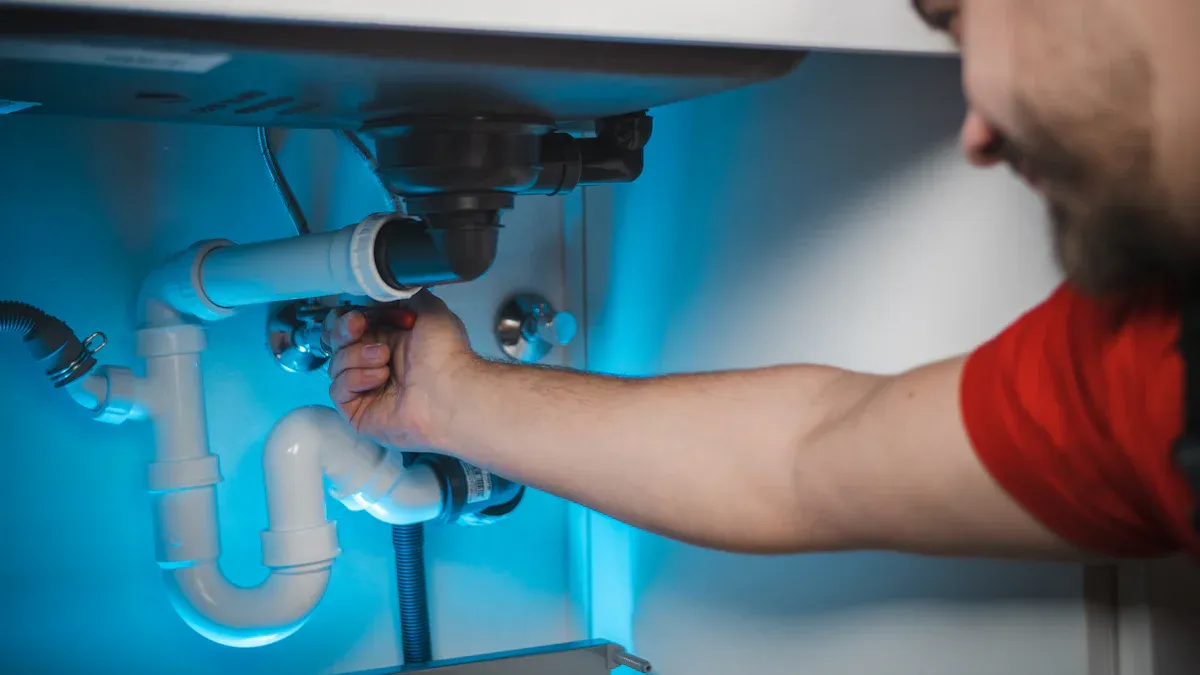
You start the plumbing installation with the rough-in phase. This step sets the foundation for your plumbing system. You need to follow a clear process to avoid mistakes.
Review your house plans. Mark where each fixture will go and map out the water supply and drain lines.
Install the drain-waste-vent (DWV) system. This system carries wastewater away and vents sewer gases.
Put in the hot and cold water supply lines. Use the right materials for each line.
Test the system for leaks before you close the walls. Pressure testing helps you find problems early.
Schedule an inspection with your local building office. The inspector checks your work and makes sure you follow plumbing codes.
You must complete each step carefully. Good planning and accurate installation help your plumbing system work well for years.
Connecting pipes is a key part of plumbing installation. You want every joint to be leak-free and secure. Use these steps for strong connections:
Clean all pipe threads. Remove dirt and debris.
Wrap threads with plumbers tape in a clockwise direction.
Apply pipe joint compound evenly over the tape.
Tighten the connection using two wrenches. Hold one wrench steady and turn the other.
For PEX pipes, use sharp shears for clean cuts. Cut at a 90-degree angle for a proper fit.
Deburr the ends to remove rough edges. This helps the pipes seal tightly.
Lubricate insertion points if needed. Mark the depth for accuracy.
Anchor horizontal lines every 32 inches. Secure hangers near connections to prevent stress.
Allow flexibility in PEX pipes. This helps them handle temperature changes.
You need to follow these steps for every pipe connection. Clean, tight joints keep your plumbing system safe from leaks.
You install fixtures after you finish the rough-in and pipe connections. Fixtures include sinks, toilets, showers, and faucets. Follow these best practices for a smooth installation:
Make sure water flows smoothly through each fixture. Check that pressure levels stay consistent.
Inspect the plumbing system for leaks before you finish.
Keep your tools and materials organized. This helps you work faster and avoid mistakes.
Use quality materials for every fixture. Durable parts last longer and need fewer repairs.
Follow local plumbing codes and rules. This keeps your installation safe and legal.
Ask for professional help if you need it.
Tip: Always shut off the water supply before you install or repair fixtures. Wear safety glasses and gloves to protect yourself.
You need to check each fixture after installation. Good fixtures help your plumbing system work well every day.
Venting is an important part of plumbing installation. The vent system lets air enter the plumbing lines. This balances pressure and keeps water flowing smoothly.
Vent pipes allow air into the drainage system. This helps waste and water drain quickly.
Vents keep the water seal in P-traps intact. The seal blocks sewer gases from entering your home.
Proper venting gives sewer gases a safe way out. This protects your living space from bad smells.
If you skip venting, pressure imbalances can siphon water from the P-trap. This lets gases into your house. Always include vent pipes in your plumbing system design.
Leak testing is the final step in plumbing installation. You need to make sure your plumbing system is leak-free before you finish the job. Use these techniques to find leaks:
Use thermal imaging to spot temperature changes behind walls and under floors.
Try video pipe inspection with a camera to see leaks directly.
Use acoustic equipment to listen for leaks behind surfaces.
Apply a soap solution to joints and watch for bubbles. This shows gas leaks.
Use pressure decay tests to check for drops in gas line pressure.
Try vacuum decay or pressure rise tests to confirm leaks.
Use soil probes to hear leaks through the ground.
You need to test every part of your plumbing system. Fix any leaks before you close walls or finish the project.
Integrating Solar Water Heaters as Part of Advanced Plumbing Installation
If you want to upgrade your plumbing system, you can add a solar water heater. The SOLARAVEN solar water heater from Changzhou Raven New Energy Technology Co.,Ltd. is a top choice for energy-efficient hot water. These systems use solar panels and advanced technology to heat water with sunlight.
Solar water heater installation includes special steps:
Mount the solar panels on your roof or a strong structure. Make sure they face the equator and tilt for maximum sunlight.
Place the water tank close to the panels. Insulate the tank to keep water hot.
Connect the solar water heater to your existing plumbing system. Secure all connections and follow local codes.
Test the system for leaks and proper flow.
You may need professional help for solar water heater installation. These systems have unique requirements and need expert knowledge. Adding a solar water heater can make your plumbing system more efficient and sustainable.
You need to stay safe when you work on plumbing projects. Start by learning the basics of your system and always know where the main shutoff valve is. Test this valve often so you can stop water quickly if something goes wrong. If you ever smell gas near your appliances, leave your home right away and call a professional. You should also check if your water line has a pressure regulator. If it does not, consider installing one. Backflow prevention devices help keep your water clean, so make sure you have them where needed.
Here are some important safety tips for plumbing:
Wear long sleeves, boots, gloves, and safety glasses to protect yourself.
Use ear plugs or ear muffs if you work in noisy areas.
Take breaks if you work in awkward positions. This helps prevent injuries.
Wash your hands often and use latex gloves when needed.
Wear shoe covers to keep your work area clean.
Safety Precaution | Description |
|---|---|
Personal Protective Equipment | Use gloves, boots, safety glasses, and ear protection for safety. |
Sanitary Practices | Wear shoe covers and wash hands to avoid health hazards. |
Ergonomic Safety | Take breaks and lift safely to prevent injuries. |
Noise Protection | Use ear plugs or muffs to protect your hearing. |
Tip: Always turn off the water before you start any plumbing job. This simple step can prevent big problems.
Many beginners make the same mistakes when they start plumbing work. You can avoid these errors by following a few simple rules.
Forgetting to turn off the water can cause flooding and damage.
Using too much force on a stuck shut-off valve can break it.
Mixing up wyes, tees, and elbows leads to code violations and plumbing issues.
Not testing for leaks after connecting pipes can cause hidden water damage.
Skipping safety gear puts you at risk for cuts, burns, or hearing loss.
You should always double-check your work and follow the basics. Take your time and read instructions for each plumbing task. If you feel unsure, ask for help or call a professional. Careful planning and safe habits help you avoid costly mistakes and keep your plumbing system working well.
You will face problems in your plumbing system from time to time. Knowing how to spot and fix these problems helps you keep your home safe and dry. Many common plumbing issues show clear signs. Look at the table below to see what to watch for:
Plumbing Issue | Signs of Problem |
|---|---|
Leaks | Drips, slow leaks, water damage on cabinetry |
Corrosion in Copper Tubing | Discoloration, deposit buildup, pinhole leaks |
Stress Corrosion in Stainless Steel | Rust, broken or frayed strands |
Cracked Toilets | Staining, discoloration, visible cracks |
Degraded PEX Tubing | Cracking, discoloration due to chemical exposure |
Issues with Brass Valves | Crystal-like deposits, corrosion |
Problems with CPVC Parts | Discoloration, cracking due to heat or chemical exposure |
If you notice water stains or hear dripping, check for leaks right away. You can often fix small leaks by tightening fittings or replacing washers. When you see rust or discoloration on pipes, you may need to replace that part of your plumbing system. For fixing a clogged drain, use a plunger first. If that does not work, try a hand auger or call a professional.
Tip: Always turn off the water supply before you start repairs on your plumbing system.
Regular maintenance keeps your plumbing system working well. You should check for leaks in faucets, pipes, and toilets. Test water pressure with a gauge to make sure it stays in a safe range. Inspect visible pipes for corrosion or damage. Clean drains to prevent clogs and keep water flowing.
Here are some easy steps for routine plumbing maintenance:
Repair minor drips and leaks as soon as you find them.
Only flush toilet paper down the toilet.
Keep a plunger in each bathroom for emergencies.
Look at all pipes you can see for signs of corrosion or leaks.
In cold weather, let a faucet drip slowly to avoid frozen pipes.
Check your water heater for leaks or rust.
Drain and flush your water heater once a year.
Change water filters as the manufacturer suggests.
By following these steps, you help prevent common plumbing issues and keep your plumbing system in good shape. Regular checks save you money and protect your home from water damage.
You can handle many plumbing tasks on your own, but some problems need a professional. Watch for these warning signs that show you should call a plumbing expert:
A leaky faucet wastes a lot of water and raises your bills.
Running out of hot water disrupts your daily routine.
Low water pressure often points to hidden plumbing issues.
Skipping annual checks on your irrigation backflow preventer can put your water at risk for contamination.
If you notice any of these signs, you should not wait. Quick action keeps your plumbing system safe and prevents bigger problems.
Tip: If you feel unsure about a plumbing repair or see water damage, call a licensed plumber. This helps you avoid costly mistakes.
You might want to fix plumbing issues yourself to save money. DIY plumbing works well for small jobs like tightening a loose faucet or unclogging a drain. You can feel proud when you solve these problems on your own. For bigger or more complex plumbing projects, hiring a professional often makes sense. Mistakes from inexperience can lead to expensive repairs later.
While DIY plumbing can be cost-effective for minor repairs, large or complicated tasks usually need a professional. A plumber brings experience and the right tools. This reduces the risk of errors and protects your home.
Here is a quick look at possible costs:
A simple leak repair may cost about $275.
Fixing major water damage can range from $600 to $2,000 or more.
Choosing between DIY and professional plumbing depends on the problem. For small fixes, you can try it yourself. For bigger issues, trust a pro to keep your plumbing system working well and your home safe.
You can do plumbing installation well if you follow these steps. First, plan your project and learn about the codes. Next, get the permits you need. Then, put pipes underground for water and waste. After that, finish the rough-in stage. Connect your system to the water and sewer lines. Install fixtures like sinks and toilets. Last, test everything and have it inspected.
Keep yourself safe and keep learning new things. Use guides like Plumbing Installation 101 and the Uniform Plumbing Code. New tools, like solar water heaters, help you save energy and protect the planet. If the job is hard, call a professional plumber for help and safety.
You need an adjustable wrench, pliers, a pipe cutter, and a plunger. These tools help you fix leaks, tighten fittings, and clear clogs. Keep your tools organized so you can find them quickly when you need them.
You can fix a running toilet by checking the flapper, adjusting the float, and replacing worn parts. Turn off the water supply first. If the problem continues, you may need to replace the fill valve.
You can install some solar water heaters if you follow the instructions and local codes. For complex systems, you should call a professional. Solar water heaters need proper placement and secure connections for safe operation.
You should turn off the water supply right away. Dry the area and check for damage. Use a wrench to tighten fittings or replace washers. If the leak does not stop, call a plumber for help.
You should check your plumbing system every few months. Look for leaks, corrosion, and clogs. Test water pressure and inspect your water heater. Regular checks help you find problems early and keep your system working well.


