

Views: 0 Author: Site Editor Publish Time: 2026-04-19 Origin: Site


Investing thousands in a renewable energy system feels incredibly risky if you cannot guarantee a hot shower at 6:00 AM. Many buyers worry their tank will run entirely cold long after the sun sets. This skepticism is completely natural, but it stems from a basic misunderstanding of the technology. Modern installations are far more complex than just tubs of water sitting in the sun. They act as highly engineered thermal storage ecosystems. Manufacturers combine advanced heat retention materials with automated backup heating mechanisms to deliver consistent, reliable results every single day.
In this guide, we will explore exactly how these systems secure your morning comfort. You will learn how high-grade insulation traps energy and how thermal physics perfectly balances internal temperatures. We will also outline the hidden mechanical backups ensuring zero disruption to your daily routine, even during harsh winters.
Overnight Retention: Heavily insulated tanks typically lose only 10°F to 20°F overnight, even in near-freezing winter conditions.
Continuous Reliability: Systems feature integrated electric or gas backups; if solar energy is depleted, the backup seamlessly takes over.
Smart Sizing Strategy: Economically sound systems are engineered to provide ~75% of your annual hot water—designing for 100% winter coverage creates wasteful summer overcapacity.
Built-in Capacity Extension: Anti-scald mixing valves combine 140°F+ stored solar water with cold water, significantly extending the actual usable volume of hot water per shower.
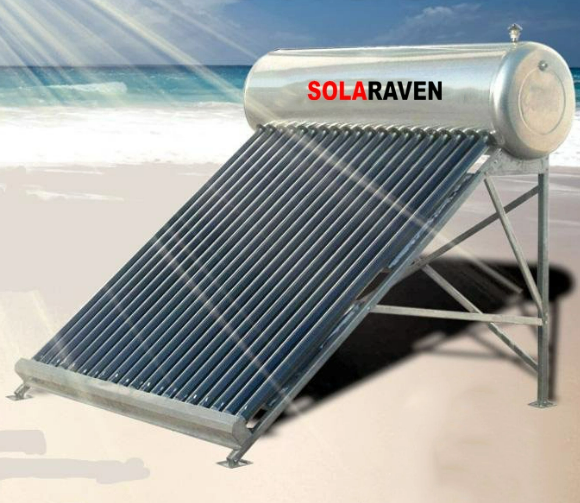
Buyers routinely express anxiety over nighttime hot water usage. They picture cold ambient temperatures stealing all the heat from their tank by dawn. This business problem prevents many homeowners from adopting renewable thermal technology. Fortunately, a properly installed Solar Water Heater prevents this scenario entirely through advanced material science and basic physics.
The primary storage mechanism relies on exceptional insulation. High-density polyurethane foam completely wraps the internal water reservoir. This barrier locks solar thermal energy inside the tank aggressively. Imagine your tank starts the night sitting at 140°F inside a standard 70°F utility room. You can expect the core temperature to drop to roughly 130°F by morning. The loss is barely noticeable during a typical morning routine.
We must also look at aggressive winter performance metrics. Ambient nighttime temperatures might drop to a bitter 30°F. Even in these freezing conditions, overnight heat loss realistically stays contained to about 20°F. The heavy insulation simply does its job without any moving parts.
Furthermore, thermal stratification plays a massive role in temperature delivery. Water naturally forms distinct temperature layers inside the closed tank. Dense, cold water enters at the bottom. The hottest, most energetic water continuously rises and remains at the top. Your plumbing output line draws directly from this top layer. You always receive the highest available temperature first. This physics principle guarantees consistent delivery and eliminates lukewarm surprises.
Ambient Environment | Nighttime Start Temp | Morning End Temp | Est. Heat Loss |
|---|---|---|---|
Indoor Utility Room (70°F) | 140°F | 130°F | 10°F |
Mild Outdoor (50°F) | 140°F | 125°F | 15°F |
Freezing Outdoor (30°F) | 140°F | 120°F | 20°F |
Modern installations use a brilliant hybrid approach to alleviate cold shower fears. A solar hot water heater acts as your primary heat source. Plumbers often refer to it as a pre-heater. If your household exhausts the captured solar thermal energy, you are never left waiting. A built-in conventional heating element kicks in automatically. Some larger residential setups utilize a secondary standard tank instead. Either way, the automated backup takes over seamlessly during high-demand periods.
Anti-scald mixing valves offer another massive operational advantage. They essentially stretch your hot water capacity. Solar heated water often sits at remarkably high temperatures, fluctuating between 140°F and 160°F. The mixing valve strategically blends cold city water into this piping hot flow. It consistently delivers a perfectly safe 120°F stream at your showerhead. yielding 2 gallons of comfortable shower water might only deplete 1.71 gallons of actual stored solar hot water. You get significantly more mileage out of every heated drop.
Behind the scenes, engineers utilize precise Delta-T controller logic. Smart controllers monitor temperatures continuously using dual sensors. They only activate circulation pumps when the roof collector is significantly hotter than the basement tank. For example, the pump usually turns on at a 6°C differential. It then turns off automatically at a 2°C differential. This strict logic prevents the system from accidentally reverse-cooling your stored water by pumping it to a cold roof at night.
Buyers need completely realistic expectations for adverse weather conditions. You must understand how components handle environmental stress. Overcast days do not cause the system to fail entirely. This represents a very common myth. Standard flat-plate collectors still generate 30% to 50% of their sunny-day heat under cloudy skies. Advanced evacuated tube collectors perform even better. They easily maintain 50% to 70% heating efficiency in low-light environments.
Freezing climates also pose no insurmountable challenge for modern renewable hardware. Evacuated tube systems are engineered specifically for severe cold weather. They maintain functional heat generation in exterior temperatures dropping as low as -40°C. The powerful vacuum sealed inside the glass tubes acts exactly like a premium thermos. It prevents bitter winds from stealing the rapidly captured solar warmth.
When sizing your equipment, strictly follow the 75% rule of thumb. Do not demand a 100% solar solution for your home. Designing a massive system large enough to provide total coverage in the dead of winter is a remarkably poor strategy. It forces the equipment to drastically overproduce thermal energy in the summer. This massive overcapacity leads to system stagnation, boiling fluids, and accelerated component wear. A highly strategic, economically sound target aims for 60% to 75% annual coverage instead.
Weather Condition | Flat-Plate Collectors | Evacuated Tube Collectors |
|---|---|---|
Heavy Cloud Cover | 30% - 50% Efficiency | 50% - 70% Efficiency |
Sub-Zero Winters | High heat loss; requires antifreeze | Minimal heat loss; operates down to -40°C |
Hardware inevitably ages. Systems occasionally experience unexpected issues. You should know the distinct difference between basic fluid physics and an actual mechanical failure. We compiled three common scenarios below to help you diagnose a sudden lack of hot water.
Misreading the Sensors (Stratification): Homeowners sometimes check the digital diagnostic sensor at the tank base. It reads cold, and they immediately assume the system broke. This reading is entirely intentional. The bottom stays cold right where the municipal city water enters. This accurately reflects natural thermal stratification.
Depleted Anode Rods: A sudden lack of morning hot water rarely points to a solar panel failure. Often, the hidden culprit is a completely unmaintained anode rod. Once this sacrificial rod depletes, the internal backup electric element quickly corrodes and fails. The solar panels continue working perfectly, but your overnight electrical backup died.
Broken Dip Tubes: Cold water enters the tank through a long plastic dip tube. This tube pushes fresh cold water directly to the very bottom. If the plastic tube cracks near the top, cold water floods the hot top layer. It destroys the natural thermal stratification immediately, resulting in lukewarm showers.
Transitioning from understanding the core technology to evaluating a purchase requires clear criteria. First, choose your preferred system type carefully. Passive setups feature fewer moving parts. They offer lower maintenance requirements and incredible long-term reliability. Active systems use circulation pumps and electronic controllers. They deliver much higher efficiency and precise temperature control. However, active models will require routine pump maintenance every 3 to 5 years.
Next, apply the standard storage-to-collector sizing rule. Industry best practices recommend 1 to 2 gallons of insulated storage tank capacity per square foot of solar collector area. This specific ratio balances daily heat collection and overnight retention perfectly.
Finally, vet your installation contractor thoroughly. A premium product frequently fails if installed poorly. Use this concise mini-checklist when interviewing local contractors:
Verify specific state solar and plumbing contractor licenses.
Ask about their field experience executing regional climate adaptations, such as installing closed-loop anti-freeze fluids.
Confirm exact warranty terms covering both physical parts and installation labor.
A properly sized solar hot water setup will easily hold optimal temperatures overnight. Precise tank insulation and seamless automated backups guarantee you never wake up to an unexpected cold shower. The technology leans heavily on advanced physics to maximize heat retention while minimizing moving parts.
We highly recommend looking at the total long-term ROI. Residential units often pay off their initial purchase premium in 5 to 10 years depending on local utility rates. The heavily integrated backup element provides a risk-free safety net for your family.
Encourage yourself to take the next step. Schedule a comprehensive site assessment with a certified local installer today. They will calculate your specific household storage needs and recommend the exact collector sizing for your roof space.
A: No, many solar tanks feature built-in heating elements. They operate independently just fine. However, in extreme climates or high-demand homes, you might want to keep the old unit. You can easily use the solar system as a dedicated pre-heater feeding into a conventional tank. This two-tank setup proves highly effective for large families.
A: Passive systems rely purely on gravity and thermal siphoning. They continue to supply hot water entirely without electricity. Active systems behave differently. They require minimal power for the circulation pump, often pulling just 5 to 30 watts. Active setups will pause without grid power unless you pair them with a small battery or dedicated PV module.
A: The initial heating phase depends entirely on ambient sunlight intensity and your total tank size. In ideal conditions, a completely full tank can reach optimal temperatures within a few hours. Direct peak sunlight accelerates the thermal process significantly compared to overcast days or early morning hours.


