| Quantity: | |
|---|---|


RNE-HPC-15
SOLARAVEN
84199010
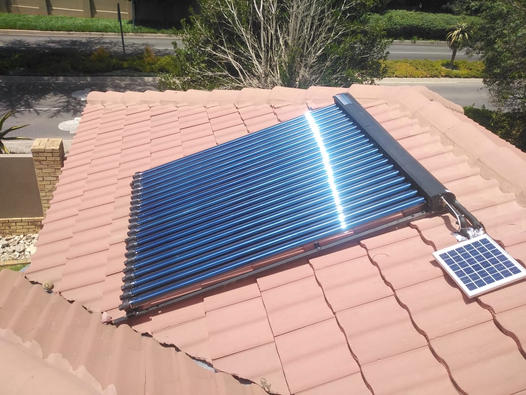
solar geyser retrofit kit - manifold heat pipe solar collector to convert electric water heater/ geyser to a solar geyser. standard copper heat pipe solar collector with 10tubes, 15tubes, 20tubes, 24tubes, 30tubes, mounted on flat or pitched rooftop
How to convert a electric water heater/ geyser to a solar water heater/ solar geyser

Connect the solar collector to the electric water heater:
Connect the outlet of the solar collector manifold to the hot water inlet of the electric water heater using a three-way valve, ensuring the correct water flow direction.
Install control valves:
Install valves at the inlet of the solar collector, the inlet of the electric water heater, and at the junction of their outlets. Control the water supply by switching between these valves.
Add safety devices:
Install a thermostat or check valve at the inlet of the electric water heater to prevent damage from high temperatures.
Test the system:
Check the pipe sealing. After startup, observe whether the solar collector heats normally and whether the electric water heater is used as a backup heat source.
Rapid start-up and stable output:
The heat pipes have a small heat capacity and a fast start-up speed. They can output heat within minutes under sunlight and quickly adapt to weather changes, effectively collecting heat even under partly cloudy conditions.
Pressure operation:
The copper heat pipe solar collectors support pressurized operation and can be directly connected to municipal water networks or forced circulation systems. Suitable for households, medium to large-scale hot water projects, the heat collection area is flexible, with a maximum capacity of several thousand square meters.
Reliability and durability:
Water does not flow directly inside the heat pipes, avoiding malfunctions caused by scaling, scale blockage, or freezing. Furthermore, the use of frost-resistant heat pipes ensures stable operation in extremely cold environments (e.g., -30℃), and damage to a single solar vacuum tube does not affect the overall system operation.